
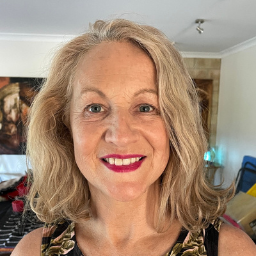
At 76, Julia lives solo on her farm. See the strength training habits keeping her independent, everyday movements, mindset, & recovery for women 70+.
“I don’t ever want to be a burden to my son… and I want my grandson to see me as a strong, independent woman.”
Timestamps and/or Read Video Transcript:
[Sheree]
Real life is the workout, carrying, lifting, getting up. Julia lets us in on her secret to staying independent while enjoying her dog and horses on her farm. Let's have a listen.
Hi there, Julia. Thanks for joining me today. That's a pleasure, Cherie.
Julia, how old are you? 76. That's a good age to be.
Yeah, it's a good age. Now, when I came to your little farm today to film you, you said a really interesting thing. It's amazing what you can lift and push and pull.
But you said something to me about you chose that lifestyle, so you have to stay. Tell me more about that.
[Julia]
Well, I've always been a country girl. You grew up on a farm? No, I didn't.
My mother did and couldn't wait to get away. But all I've ever wanted to do is live on a farm. So, I've had horses for 40-odd years.
And yeah, it's just a lifestyle I love. I like to be busy. I like to be outside.
[Sheree]
Yeah. And so, because you've chosen that, then you just have to make sure that you stay strong enough and healthy enough to be able to maintain that. Yeah.
And you've also got animals to feed, don't you?
[Julia]
I've got two horses and a dog.
[Sheree]
Yeah. And they all require feeding and caring.
[Julia]
Oh, they do. The dog likes a walk every day for about an hour.
[Sheree]
Oh, an hour. I know. Wow.
My son's dog that I take every day for a walk only gets about a half an hour, just over. Yeah. So, an hour is pretty good.
Yeah. And then do you ride your horse still? You said today that you do.
[Julia]
I do. Yeah, yeah. I haven't through winter.
The weather's been so unfriendly, but I'll start again soon. I love that. I think that's so good.
[Sheree]
So, being able to get up on a horse, Julia, do you need a step? Do you need to put a step there beside the horse to get up?
[Julia]
Oh, definitely. It's a very long time since I've been able to get on from the ground.
[Sheree]
Yeah, because I looked at your horses. They're not like little short little things.
[Julia]
No, no, no. She's 15 one.
[Sheree]
Yeah, gotcha.
[Julia]
So, her withers about there.
[Sheree]
Which bit?
[Julia]
Which is like the tallest bit of her back.
[Sheree]
Oh, the tallest bit. Okay. And then, so you get up on a stool and then get that leg over.
[Julia]
Yeah, yeah. I've got a mounting block which is, I guess, about, can you see that? About that high.
Okay.
[Sheree]
About up to the top of your thigh.
[Julia]
Yeah.
[Sheree]
Okay. And then from there you can...
[Julia]
So, I just get on there and then I can just put my leg over and sit down.
[Sheree]
Perfect. Yeah. That's so good that you can still ride a horse.
Yeah. So, you won't stop?
[Julia]
Not until I have to.
[Sheree]
Okay. So, that would be, say, if you broke a leg or something.
[Julia]
Well, one of my former instructors, she was riding certainly into her mid-eighties. That's brilliant.
[Sheree]
So good.
[Julia]
There you go.
[Sheree]
It can be done. It can. It's so good, Julia, because I think it's great just to hear what you can still do because we don't have to let life stop when we get to a certain age, do we?
[Julia]
Oh, absolutely not. What are you going to do? Sit in a chair and wait for the end?
[Sheree]
Well, some people actually do.
[Julia]
That's so sad.
[Sheree]
Yeah, it is so sad. You're still living a full life and fulfilling dreams, which is fantastic. Losing muscle after 50 isn't your fault, but it is fixable.
Take the free How Strong Are You quiz and get a personalised result and a simple plan for your next step. The link is in the description and pinned comment. What obstacles do you encounter?
Are there any obstacles? You're on your own, aren't you? So, are there obstacles there?
Are there some times that you may feel like you don't want to feed your animals?
[Julia]
No, generally not. The only thing that I'm finding difficult is my hands. So, I've got arthritis and I've got a lot of battery-driven technology, like a lawnmower and a whippersnapper, and they're made for men's hands.
You have to get the battery off the whippersnapper. And with my hands, with also having lost strength, but they're not big enough. Getting that battery off the whippersnapper.
Wow, you don't even think of that. You're right, because it's going to be a wide grip. You've got to go like that and then grip it and pull it at the same time.
That's the only thing I'm finding difficult.
[Sheree]
Yeah, you don't even think of that, but you seem to have strength to lift your hay bales.
[Julia]
Oh yeah, I can do all of that.
[Sheree]
So, you're good with that, but it's just things where you've got to grip a bit wider.
[Julia]
Grip and do that. And hold and pull.
[Sheree]
Yeah, okay. So, how long have you been on your farm for?
[Julia]
It'll be eight years next April. Yeah, and you plan to be there forever?
[Sheree]
Long as I can. Don't have plans to go to a retirement home or anything? Oh God, never, never.
I must say, I can't see that you'd be that sort, but then I can see that you are not going to let yourself just go. So, as long as you can stay on that land, you'll stay on that land. What are some important things that you do then in your life?
I know you come here for training to stay on your land, to stay doing what you do. I guess you just keep doing what you're doing.
[Julia]
You just keep doing it. I think if you stop, that's when you start losing the capacity. So, yeah, I just stay busy.
I mean, I love a project. I love to be outside. I'll do what I have to do.
Take the dog for walks. Yeah, I do lots of other things away from the property as well, just for mental stimulus.
[Sheree]
I like that. You were telling me a few days ago that you take every week your dog, who's been a trained or been deemed to be a fine around children, to the children, to the school down the road.
[Julia]
Tell us a little bit about that. It's pretty cool. It's wonderful.
It's a story dogs. It's called Story Dogs and it's a national program and it's designed for kids who have issues around literacy. It's wonderful.
Like, you know, they might be struggling to read. They might have anxiety. Yeah.
They might just need a bit of time out with a dog.
[Sheree]
Yeah.
[Julia]
And so, we go to Margate Primary School, settle the dog down on a mat. Wonderful. Sit the kid next to the dog, pick a book and then we just read for 20 minutes.
[Sheree]
That's so cool. What a great dog to take to school and what a great thing. That would keep you going as well.
[Julia]
Oh, it does. I mean, the other thing with it is that I have to get down onto the floor and up again.
[Sheree]
Yeah.
[Julia]
Four times for each, you know, time for each reader. So, that's good exercise.
[Sheree]
Don't even think of that. You're right. You've got to stay mobile for the kids.
[Julia]
Yeah, I do.
[Sheree]
And then be able to get the dog back in the car again and home again. Yep. That's perfect.
So, what are some of the highlights, Julia, of staying strong?
[Julia]
Independence for me is the thing.
[Sheree]
Huge, isn't it? Huge.
[Julia]
I'm very lucky. I've got wonderful neighbours and every now and again I call on them and say, can you help me with whatever? But you can't rely on other people to look after you.
[Sheree]
No, you can't.
[Julia]
If you're going to choose that lifestyle, you have to make sure that you're as fit as you can be to cope with it.
[Sheree]
I love that.
[Julia]
And yeah, to be independent, it's always been my thing. I've always hated asking for help. I have to a bit more now than I ever have before.
[Sheree]
I can see that. There's somebody else that I train in my studio here that knows Julia and she also has a horse that she rides and she said, Julia is a tough nut that if she ever fallen off a horse, she'll get straight back on. No moaning or groaning, just get straight back on.
So, I think that helps, that grit and determination.
[Julia]
Oh yeah.
[Sheree]
Don't you find? Helps you to get through and keep going.
[Julia]
Yeah, absolutely.
[Sheree]
When times might get tough and I know every now and then you have a back that plays up a bit.
[Julia]
Yeah, a little bit. It's been a lot better since I've been coming here, I have to say. Yeah, it's been really good.
[Sheree]
That is great because they're going to say, what do you do when that plays up? You just kind of do what you can.
[Julia]
Do what you can, yep.
[Sheree]
And then get back on with it.
[Julia]
That's right.
[Sheree]
Right.
[Julia]
I mean, there's always tomorrow if you can't get it done today, just, you know, go easy on yourself.
[Sheree]
That is so true.
[Julia]
But keep going.
[Sheree]
That's good. So, Julia, what are some of the hardest things you have to do on your farm?
[Julia]
I don't find any of it particularly hard. Okay. Lifting heavy things, I suppose.
I mean, a bag of chaff is 20 kilos, a bag of pellets is 15 kilos, bale of hay must be, I don't know.
[Sheree]
So, I could see that Julia just put this hay bale in. Now, she's twice my age, well, not twice my age, go back. Not quite, not yet.
So, I could just see Julia put his hay bale in. I've never picked up a hay bale in my life. I don't live on a farm.
So, I just want to, oh, I reckon this must weigh, what do you reckon, 20 kilos? 20 kilos, maybe. It is incredible.
So, it is actually quite hard for me to lift. My core is on. It's like, oh my goodness.
She does this as part of her everyday life. You lifted one. Yeah, they're big.
I would say about 25 kilos or so, probably. Heavy. When I saw Julia lift one and throw it onto the wheelbarrow, I thought I'd have a go.
It's like, oh my goodness. This is actually really hard. I think if you did it every day, like every week and threw it around, you would.
But for me as a strength trainer, I'm thinking that is hard because I've only got the little strings on it and you don't really have anything to hold. Not like our gym equipment has an actual handle. No handle.
Your straw does not or hay does not have handles.
[Julia]
No, it doesn't.
[Sheree]
No, that was actually quite hard. So, Julia, what's your diet like? Can you tell us a bit about your diet?
Because that must help to give you energy and fuel your body up for the work you need to do.
[Julia]
Yeah, I think I don't eat processed food. It's all, so I prepare everything from scratch.
[Sheree]
Yeah, that's great.
[Julia]
I eat a lot of vegetables. I don't eat red meat, really. I mean, occasionally if I go out, I think, oh, maybe I'd better have a bit of iron.
But I wouldn't cook it. Eat a lot of fish.
[Sheree]
So, you get your protein mainly from your nuts and peas and stuff like that.
[Julia]
Nuts, eggs, fish, chicken. I try to make myself eat lentils, but I don't really like them.
[Sheree]
No, I don't eat them much except for when my other half prepares it. So, yeah, you're right. They're a bit hard to prepare if you make nice spices and flavours.
But okay, so it's good. So, you're really unprocessed and you grow your own stuff or you buy it?
[Julia]
I used to. This year I've given it up. I've just thought I've got way too many other things to be doing.
I agree. Fortunately, my lovely neighbour has an enormous vegetable garden. So, I just can go over and say, oh, I'll have some of that spinach today.
And oh, potatoes, good.
[Sheree]
That is so good. There you go. It pays to have good neighbours.
It really does. Good gardeners, well done. What do you say to yourself when you've had a hard day?
I think we've kind of already talked about it. You just get on with things. Tomorrow's a new day.
[Julia]
I very rarely have a bad day. Every now and again, yeah, I don't know. I just, I'll sit down with a book.
[Sheree]
Yeah, I like that. Or watch a movie. Yeah, and so you just kind to yourself and go, that's okay.
And tomorrow's another day. I'm just going to sit there with a good book. Or do you drink wine or anything?
I don't drink at all. Yeah, okay. There you go.
Maybe that helps you to stay as strong and good as you are.
[Julia]
I mean, every now and again, I'll have a gin and tonic with a friend. But yeah, I wouldn't say I drink.
[Sheree]
Okay.
[Julia]
But yeah, I think you've just got to be, you've got to think to yourself, well, I'm feeling a bit rotten now, but it'll pass. I like that. Tomorrow I'll feel a bit better.
And the day after that, it'll be gone.
[Sheree]
That's a good way of thinking, actually. I like that. So Julia, we all have a why of why we do things.
And you go strength training and stuff. Does that, your why must be to help you stay at home, independent, like you said before, and stay on your land? Oh, yeah.
Feed your animals, better do dog stuff, better go and see friends. But primarily, I know you love your land, so.
[Julia]
I do. I do. And I don't ever want to be a burden to my son.
No. And yeah, I want my grandson to see me as a strong, independent woman.
[Sheree]
Love that. That is so what I want too. Because who wants to be a burden on their family?
And then don't you want your grandkids to go, I want to be just like her when I'm the same age?
[Julia]
And to want to spend time with me, not go, oh, poor gran, I have to go. I don't want to be that old woman. I love that.
So how old's your grandson? 13. So it's a good age when they're in those teen years.
And I can take advantage of his labour every now and again.
[Sheree]
That's so good.
[Julia]
I say, can you just lift that bag of chaff and put it in the bin for me, Solly? And he goes, yeah.
[Sheree]
Yeah, I love that. I think that's so good. So, Julie, I noticed too that in strength training, a lot of the older, the other older ones in our group don't want to go down to the floor.
They're actually quite scared of the floor. And I think they find it so hard to get back up. You get yourself down and up with ease.
[Julia]
I do.
[Sheree]
Is it because you just kept doing that? I think so.
[Julia]
I think so.
[Sheree]
There's nothing special in that. But if you just maintain it, it's not so hard, is it?
[Julia]
I mean, I'm lucky I'm pretty flexible.
[Sheree]
Yes.
[Julia]
I haven't stiffened up.
[Sheree]
No.
[Julia]
And yeah, I just have always got down on the floor to read or, you know, play with the dog or…
[Sheree]
Oh, perfect.
[Julia]
…whatever.
[Sheree]
That is so good. So I think that's the thing. I think it's something that if you don't use it, you do lose it.
And so for anyone at home, if you think I can't get down the floor, you start doing it because the more you do it…
[Julia]
Yeah.
[Sheree]
…the better it'll get.
[Julia]
The easier it gets. Yeah.
[Sheree]
And Julia, you did a handstand a few days ago, didn't you, for the first time? I did. I was very proud of myself.
We're shortly going to show Julia doing a handstand again.
[Julia]
Oh my goodness.
[Sheree]
But what is good is that I said to the ladies who are all in their 70s, 80s, I said to them, look, I don't expect you to do this, but this is what I did in the earlier group. And Julia says, you know what? I'm going to try that.
I just want to try it and see how I go. So she did and she did it and she did it incredibly well. So good job.
[Julia]
Thank you.
[Sheree]
And now that you have done it, you've said that you'll be doing it again. I will. Just to maintain it.
And have you ever done a handstand before? Never. Or a wall kind of stand?
[Julia]
No.
[Sheree]
There you go. So this is a first timer that Julia has done this handstand. Julia, I want to thank you.
What would you say to somebody out there that just kind of thinks, oh wow, that person is so lucky that they're on land. That's what I would love to be doing. Is there any encouragement that you would give to that person that's going to be watching this on TV right now?
What would you say to them as some encouragement? I know that not everyone's going to ride a horse. Not everyone's going to be on farmland.
But what would you say to them that you feel could help them just to be good and stay at home, stay independent in older age?
[Julia]
Gosh. I mean to be really clear with yourself about what you want and what you think you can do and take it one step at a time.
[Sheree]
I like that.
[Julia]
It's the old eating an elephant thing. Just take it one step at a time and you'll be amazed what you can do.
[Sheree]
That is so good. And it's so true. You're right.
One little bit of a move, then add to it, add to it, add to it. And even if you're not strong, add like little weights all the way along till you get to that place where you can carry that crockpot or whatever really well. That's a good one, Julia.
I love that. Good advice. So, thank you for joining me today.
It's been a pleasure. Yeah. Thank you.
I hope you've inspired some people at home to keep going and yes, stay strong. Thank you. Thank you..
Thrive Leads Shortcode could not be rendered, please check it in Thrive Leads Section!
