
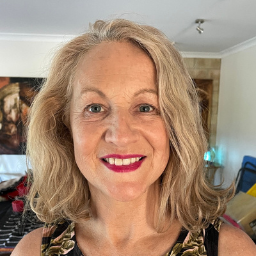
We're all busy women, but recovery isn't indulgent, it's actually productive. Here's how restoring well multiplies your strength.
“So, I use the foam roller, you know, just in front of the telly when we're all sitting down as a family and just roll out all of the necessary sore bits. I like that.”
Timestamps and/or Read Video Transcript:
[Sheree]
We're all busy women, but recovery isn't indulgent, it's actually productive. Here's how restoring well multiplies your strength. Now, restore is the hidden accelerator, so sleep, stress, mobility, and little rituals that keep your body training ready, all ready for the next round.
In this episode, you'll hear how one woman, Cassie, protects her peace and recovers well, so that she can push hard when it counts. So, borrow her one small restore that you yourself can do today. Hi, everyone.
Thanks so much for joining us today. Today, we're going to have Cassie join us. Thank you for joining us, Cassie.
Oh, thank you for asking. Yeah, you're welcome. And we're going to be talking about how to restore your body, because it's really important when we're strengthening and getting our body strong to also take time out to recover.
And that is rest, it's foam rolling, it's cold water, dipping, it's stress, being able to manage stress. And I think, Cassie, that you did that quite well. Oh, thank you.
Let's delve into it. How old, Cassie, are you, and why did you start strength training? So, I am 51, Cherie.
Great age to be. Thank you.
[Cassie]
Spring chicken. Spring chicken. I don't feel so sometimes.
And basically, I got into strength training because I just finished doing roller derby, and I just wanted to really increase my strength because I just wanted to have fitness to do the everyday things.
[Sheree]
Love it. Love it. And you're not a grandmother yet, are you, Cassie? [Cassie]
No, I'm not a grandmother.
[Sheree]
But could be maybe 10 years away from being a grandmother.
[Cassie]
Could be less.
[Sheree]
And so, you're preparing for it now?
[Cassie]
Oh, absolutely. I think I'm just preparing for getting ready to just keep going and be active.
[Sheree]
I love that. That's so good. So, what did recovery look like before you started strength training?
Did you do anything to recover? And what does it look like after you started strength training and were more aware of it?
[Cassie]
Yeah. So, obviously, I did some yoga. I was doing baths and that type of thing.
I never really started the foam roller until I started coming to sessions with you. And I found the foam roller to be excellent. So, I actually do that regularly.
And I just felt with roller derby, I used to be quite tight, and especially my calves, because you can imagine skating, and very quite physical cardio. And I just felt that after I've started strength training, I'm really aware of the muscles that I need to look after.
[Sheree]
That's so good.
[Cassie]
Yep. And I'm just, yeah, I'm much more attuned to what I need to do to be able to recover after a session.
[Sheree]
I love that. I think that's so good. Which recovery practice?
So, which specific one, whether it be foam rolling, power nap, maybe, after you've done a strength training session, or after you've been at work, or foam rolling, or even an evening routine, what works best for you? Like, what has given you the biggest payoff? Like, what has returned back to you?
Because I know that you also cold water dip pack. Yes, I do. [Cassie]
Yes.
[Sheree]
And this is in Tasmania. So, we are at the southernmost, for those of you who don't know where it is, the southernmost point of Australia. So, it's down towards the Antarctic Ocean.
Like, I know the Antarctic is not only a few thousand k's away, but we are cold. Yes, we are cold. So, how do you find, so what, of all the things that you do, you seem to really enjoy the cold water dipping, don't you?
[Cassie]
I do. Yes, I do. It's also really great for your immunity and things like that.
And I do that with my partner. We sort of egg each other on. And we do fresh water and salt.
I love it. And the difference is quite interesting between the fresh water and the salt. What do you prefer?
I like the salt water, I think. Yeah. And I think the other thing that I really do is the foam roller. [Sheree]
Yeah.
[Cassie]
So, I think the foam roller is something I'll go home. I really suffer from restless legs. [Sheree]
Oh, yes.
[Cassie]
So, I use the foam roller, you know, just in front of the telly when we're all sitting down as a family and just roll out all of the necessary sore bits. I like that.
[Sheree]
And you were saying that you use magnesium oil as well. Which is a great one to get sometimes into those really tight areas that kind of contract up, isn't it?
[Cassie]
Absolutely.
[Sheree]
And you find that that's good for your legs as well if you get the restless legs?
[Cassie]
I do. And I also regularly take magnesium tablets as well. And I often find hot water is good. So, I often have a shower before I go to bed.
[Sheree]
And you were also saying to me earlier that you also love the saunas, the saunas that travel around on the back of a trailer and go around to the beaches. So, you go in the sauna, so you're all hot and then you run down to the beach and dip.
[Cassie]
Yes, that's exactly right. Sounds great. Well, it's a Finnish sauna.
And yeah, it's absolutely amazing. And then you do that a number of times over an hour. Love it.
So, yeah. And it's just really lovely when they park next to the beach and you just spring out and you're all steamy and then you dive into the beautiful Tasmanian water.
[Sheree]
That's about the only way I would dip into that cold Tasmanian warm is if I was boiling hot and I just needed to cool down. So, Cassie, how has lowering stress mentally and physically, how has that spilled over into your relationships or work?
[Cassie]
Well, I'm a high school teacher, so it is quite a stressful job. And I actually find that releasing that cortisol is really important. So, doing that strength training gives me that chance to let it all go.
And I just feel that since I've started this strength training in the last four years, I actually feel like I can go to work and really cope with what's happening. I'm a performing arts teacher and a dance teacher.
[Sheree] Yeah, you are.
[Cassie]
I'm doing a lot of that sort of work. [Sheree]
Yeah, I noticed that. And you went away not long ago because you just decided you needed time out. And don't you think it's important for all of us to take time out because you are a teacher, you've got obviously before and after school work to do as well.
You have to deal with parents often. So, there's a lot of stuff going on. You've got your own child, you've got a partner, and then you've got your partner's children.
So, there's a lot going on. So, I love the fact that you took yourself off recently and didn't feel too guilty about it, did you? I did not feel guilty.
You went to different musicals and performances.
[Cassie]
Yes, I had five days in Melbourne just recently and I absolutely loved it. I made sure I started in February and I planned it through and I said to everyone, this is what I'm doing. Because a lot of the things I love, my family go, I don't want to go and see that musical.
So, I treated myself a five-star hotel and I stayed for five nights and I was just magic. So, that was just recently. And did you get upgraded?
I did get upgraded. She got upgraded. How cool is that? [Sheree]
So, you felt like a queen, didn't you? I did. It was wonderful.
I think that sometimes we have to take that day-to-day, just at us and at us and at us, putting stress and pressure on us all the time to kind of go, right, I'm stepping out of this now for a while and taking time for me, which was really good. And I know you came back so refreshed and happy and you were just on top of the world.
[Cassie]
I was. And I did miss people in the family, but I also felt so fabulous. I think that's good.
Just doing your own thing, like it was basically, when was the last time you picked up your handbag and just went, it's just us. That's right. Off we go.
[Sheree]
You and the handbag. You and the handbag. I loved it.
Where will I go for dinner tonight?
[Cassie]
Yes, yes, yes. Yeah, no, that's so good. Which musical will I see?
[Sheree]
Yeah, exactly. And how many did you see in total? Three.
Three musicals in that only few days. So, it's pretty good. So, many women, Cassie, feel guilty, really guilty when they do downtime, like they take time out for themselves.
So, what mindset shift did you need to have to help you claim your, like to actually see that as a good thing, not indulgent, not feeling bad or guilty about it? Was there anything or you just went, I've given enough to the family, it's my time? Was it just simply that?
[Cassie]
Yeah, I think it was a combination of both of those things. My family's been going through some sort of big things. And in February, I just thought, right, that's it.
I actually just, I really want to see Beetlejuice, the musical. And so, I thought, I'm going to go to that. I'm not going to take anyone.
And then I just started really planning this lovely, elaborate trip. And I saved up for it. And it was such a reward.
And it actually kept me going through the really hard days.
[Sheree]
That's good. I know that you've had a bit going on in your family life. So, I think that's great.
And it is good that you didn't feel guilty. No, not at all. Because we do give out so much for our families, don't we?
And that's what I think that so many of you out there, you give so much. And I see this time and time again. You give out so much that you don't look after yourself.
And sometimes I'll see people that know that they should have started strength training and looking after their body and taking time out maybe 10 years before, but they didn't do it until their body starts to be really quite broken. And we can still work with that. But boy, why not do it a bit earlier, like at your age, Cassie?
[Cassie] Absolutely.
[Sheree]
So that hopefully by the time you're into your 60s and 70s, you're still taking time out and still like doing what you need to, but take time out and restore your body and recover your body.
[Cassie]
Absolutely.
[Sheree]
So it's a good thing. Oh, yes. [Cassie]
I was just going to say too, it's really important. My daughter actually really loved the fact that I went away and could see the benefits of it too. So she said, I will miss you, mum, but I think it's really good you're doing this.
So that was really... [Sheree]
That is so good, Cassie, because she would learn to do it for herself. Yeah, absolutely. And she won't feel bad.
I love that. We need to start a whole movement of women who raise kids and look after grandkids and do all the things they do that don't feel bad about taking time out because we do give out so much of ourselves.
[Cassie]
And we become better mums. We do.
[Sheree]
And better people. We do. And what a wonderful role model because she can see it and she will do it and she'll do the same with her own kids as well.
It's so good. Cassie, tell us about a moment when better recovery directly improved your performance in life or whatever I'm known. I just see that when you go for those cold water dips and then come to training, you're on top of the world.
So is there any specific moment or time or is it just when you take time out like you did? Is there anything specific or is it just a combination of all these things?
[Cassie]
I think it's a combination. And I also really love, you know, like you said about the saunas. I think taking that moment when you plunge into the ocean though and you feel really grounded and you just feel at peace.
You're very present and that's what I really love about it. And sometimes if it's really cold, you have nothing else to think about other than the fact that you are really cold and you need to breathe through because you're often in there between five and eight minutes.
[Sheree]
Yes, true. And maybe that's why I don't go cold water dipping because I'm in such pain. That I can think of nothing but the pain.
But I'm sure if you do stay in there, this is a tip for anyone that does dip in cold water, is that if you do stay in there long enough, you go numb and you can't feel anything anymore. So you're okay. You can stay in there a wee bit longer than what you can.
That first plunge is always the hard one.
[Cassie]
Yes, that's the really hard one to get all of the shoulders down.
[Sheree]
Yes, absolutely. And do you go under with your head as well?
[Cassie]
I do right at the end, right at the end. And then I just, yes, absolutely. And it's easier when you're with people too.
[Sheree]
So you can sort of go, come on, we can do this. I like to count myself down, Cassie. It's the only way I can do it.
I count myself down from 10 and on one, I have to go under. Like I'll make myself do it. I'm the same.
So Cassie, we're just going to end off with, can you name one recovery habit or maybe all of them? What is one thing you would say? And this is what I always like when I interview someone to look directly out to that person on the other side of that camera there.
What would you say to that person out there that goes, I don't have time to look after myself. I don't have time to recover. I don't even have time because the other thing that you didn't include in there, you bought that vibration machine too.
Did you use that vibration machine? Dr. Graham. [Cassie]
Yes, Dr. Graham.
[Sheree]
I did buy that one, yes. It's quite nice because if you've got a tight area, you can get in there with a vibration machine. It's got a long handle.
She can get right down the back as well. Actually, it was a fantastic family Christmas present. Yeah, and it's a good one.
So what would you say to that person at home, right out there that feels like they are too busy. They just don't have time for themselves to actually take time out, even to smell the rose. They don't have time out to do a cold water dip.
They don't have time out to roll on the foam roll. And they don't certainly, maybe you don't have time to go away for three or four days doing like you do. What would you suggest to that mother out there or grandmother out there that is full on with life?
[Cassie]
I would say just take a moment. So be present. Even if it's like you just go for a walk around the garden or you take the dog for a walk.
You need to just stop that mind chatter and just be breathing in, be grateful of your surroundings. And I think, yeah, presence is a very important thing because everything gets so busy. You get so wound up in daily life and we forget to actually just stop sometimes and just breathe.
I love that, Cassie. Good advice.
[Sheree]
Thank you. Well, I hope you enjoy that. A wonderful lady here.
When Cassie trains, she goes hard, but I love the fact that she does take herself home and recovers in various ways as well. So thank you for tuning in today and thank you for joining me, Cassie. Thank you for asking.
Great, we'll see you next time. Bye.
Thrive Leads Shortcode could not be rendered, please check it in Thrive Leads Section!
