
Hey there, today I want to talk on the pushing motion, and unpack a variety of pushing exercises for you.
So picture this, you're nudging open the heavy cafe door with one hand while balancing your grandkid on the other hip. No strain, no wobble, just moving forward with effortless power.
Or you may have just started cleaning up your yard and you have several wheelbarrow loads of green waste that you need to load up into the trailer. Now that's the magic of a well-trained push.
Today we'll fire up chest, shoulders and triceps along with that core and with some functional moves to protect joints and ensure that we switch on the right muscles so that we're confident in our ability to push anything at all.
A functional core is crucial for a functional push. With a strong core it lays the foundation for the arms and shoulders to work and it also anchors the pelvis and lower extremities. If our core isn't switching on correctly then the shoulders can totally overwork and do all the work that they're not designed to do.
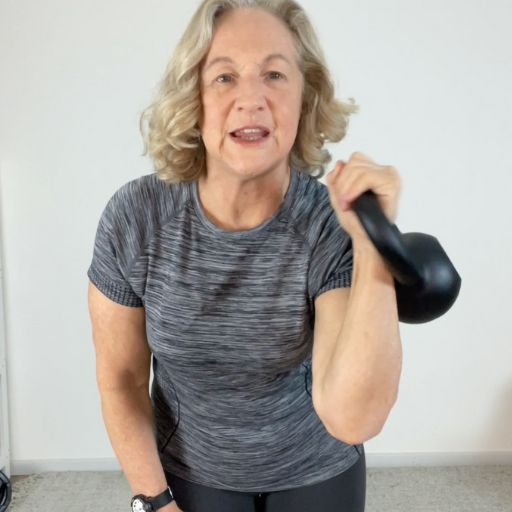
So today I'll be using a band and a pair of dumbbells and some body weight... so clear some wall space and let's push our way to a strong capable grandma strong body.
Let's get into it.
Watch: Pushing Exercises for Women Over 50: Boost Upper Body Strength & Everyday Power (17mins)
Press play or keep reading, either way, you’ll master this essential ADL move in under 20 minutes.
Ready, let's jump deeper into the 'Pushing Exercises Exercises for women Over 50' lesson:
So, in this post along with the why, you'll learn some pushing exercises you can do at home, and then we'll wrap up with a simple twelve-minute at-home workout that keeps you pushing well and pain-free.
WHY the "Push Pattern" Pushing Exercises Matter + Real-Life Implications:
Every time you load groceries, slide a heavy door, or push yourself up from the garden, you’re practising the very movements that guard independence, posture, bone density, heart health, and fall-resilience. Let's dive into how to train the push pattern, and live GrandmaSTRONG.
1. Pushing a loaded shopping trolley up a carpark ramp:

Real-life Example: Having strong chest and arm muscles enables you to move the trolley so it doesn’t stop or roll back. That means you can finish your shopping without needing help.
Why's it's Important: To maintain independence in daily tasks means maintaining stronger horizontal-push muscles, which predicts how easily we manage multi-joint chores without assistance.
In a 2024 research article studying the correlation of muscle in active daily living for older adults, they found that lower limb & upper-body strength are directly correlated with better Activities-of-Daily-Living (ADL) scores in adults 60 +
2. Closing a stiff sliding glass door on a windy day:

Real-life Example: Developing the muscle power in your shoulders lets you slide the door shut quickly. This saves your back and stops the door from slamming on fingers.
Why's it's Important: To have functioning posture & shoulder control, the 'Push Motion' engages pecs and chest muscles to counter forward-rounded shoulders and shoulder pain common in post-menopause.
A 2024 research article on resistance band exercises and shoulder posture health found elastic-band pushing drills reduced forward-shoulder posture in older women after 8 weeks.
3. Rolling from side to side to sit, then pressing off the floor to stand:
Real-life Example: Having the strength for a simple small push with your arms helps you sit up smoothly. Good push strength lets you get out of bed or up from the floor without wobbling or feeling stuck.
Why's it's Important: Having the mobility and stability for falls & injury prevention, is paramount in being able to push the body away from the bed/floor, meaning fewer risky “heave-ho” moments and smoother loaded movement transfers.
A 2025 study review looking at falls prevention and limb fractures highlighted upper-limb strength training as a core component of fall-prevention protocols after upper-limb injuries in older adults.
4. Hoisting a Grandchild in the air or an air-fryer to a high shelf:
Real-life Example: When using the upward push motion, IE. pressing weight overhead, it works the chest, shoulders, and bones. Strong muscles keep the item steady so nothing crashes down.
Why's it's Important: You'll activate and maintain strong bone-strength stimulus, through good functional form with loaded overhead or diagonal presses, IE. 'Upward Push Motion,' places healthy stress on spine & shoulder girdle, encouraging bone remodelling.
A 2025 study focusing on optimal resistance praining for bone mineral density on post-menopausal women, the findins highlighted that resistance-training programs with presses (push motion) significantly raised spine & hip BMD (Bone Mineral Density) in post-menopausal women.
5. Pressing yourself up from garden beds or pool edges:
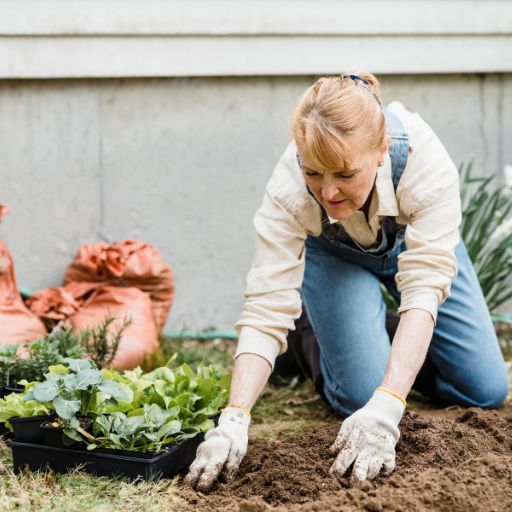
Real-life Example: This move is like a push-up in real life. Strong arms lift your body fast, so you don’t slip, and surprisingly, maintaining push-up strength keeps your heart and joints healthy.
Why's it's Important: Because cultivating good heart & metabolic health, is practising the same push-up style motion that gets you out of the pool, which is a proven yard-stick for cardiovascular resilience.
A 2019 study looking at an association between push-up exercise and future cardio events highlighted that greater push-up capacity was found to dramatically lower 10-year CVD (Cardio Vascular Disease) risk. (NOTE: The mechanics of which applies to women, though original study was for men).
How To Push with a Resistance Band - Beginner Technique in Detail
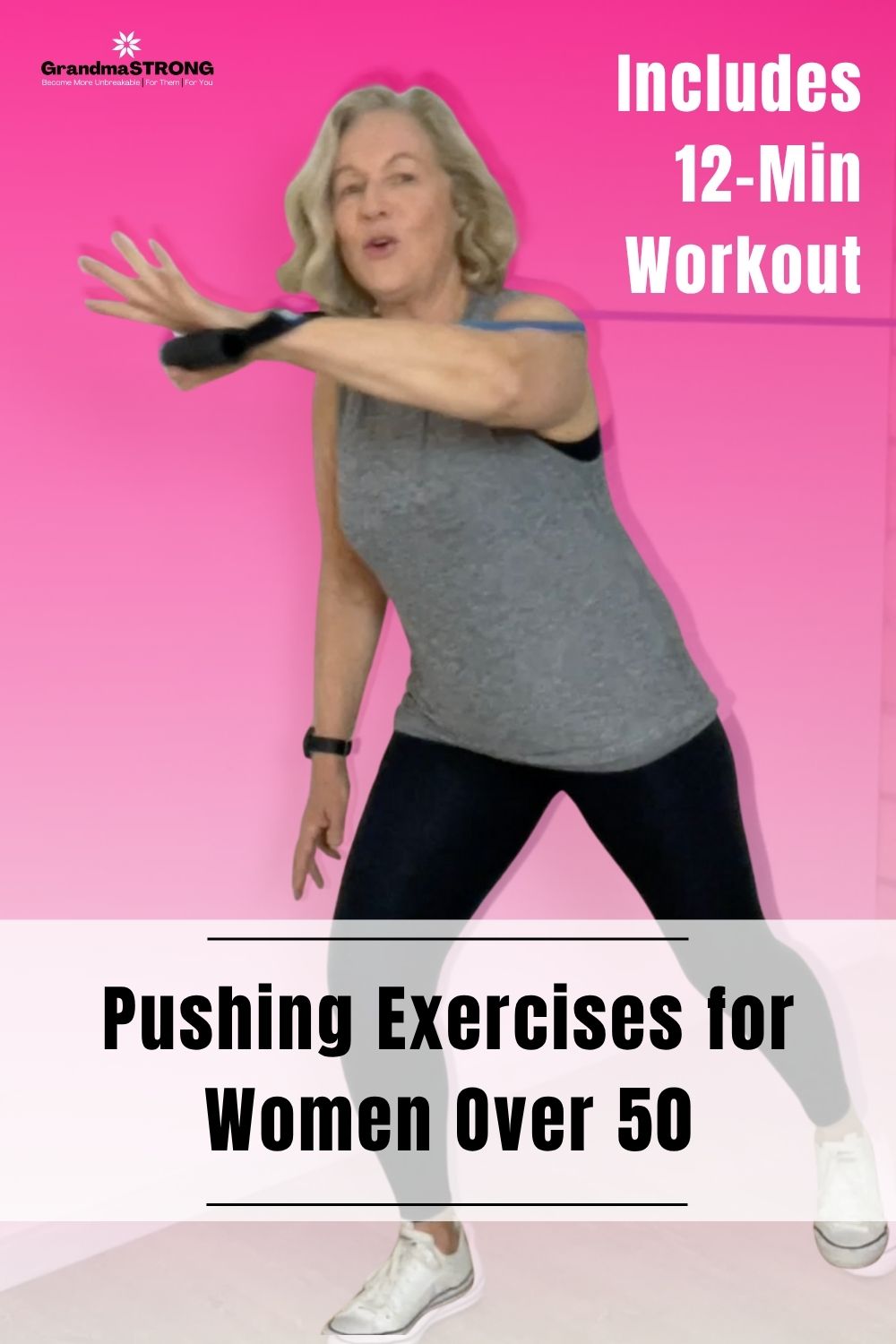
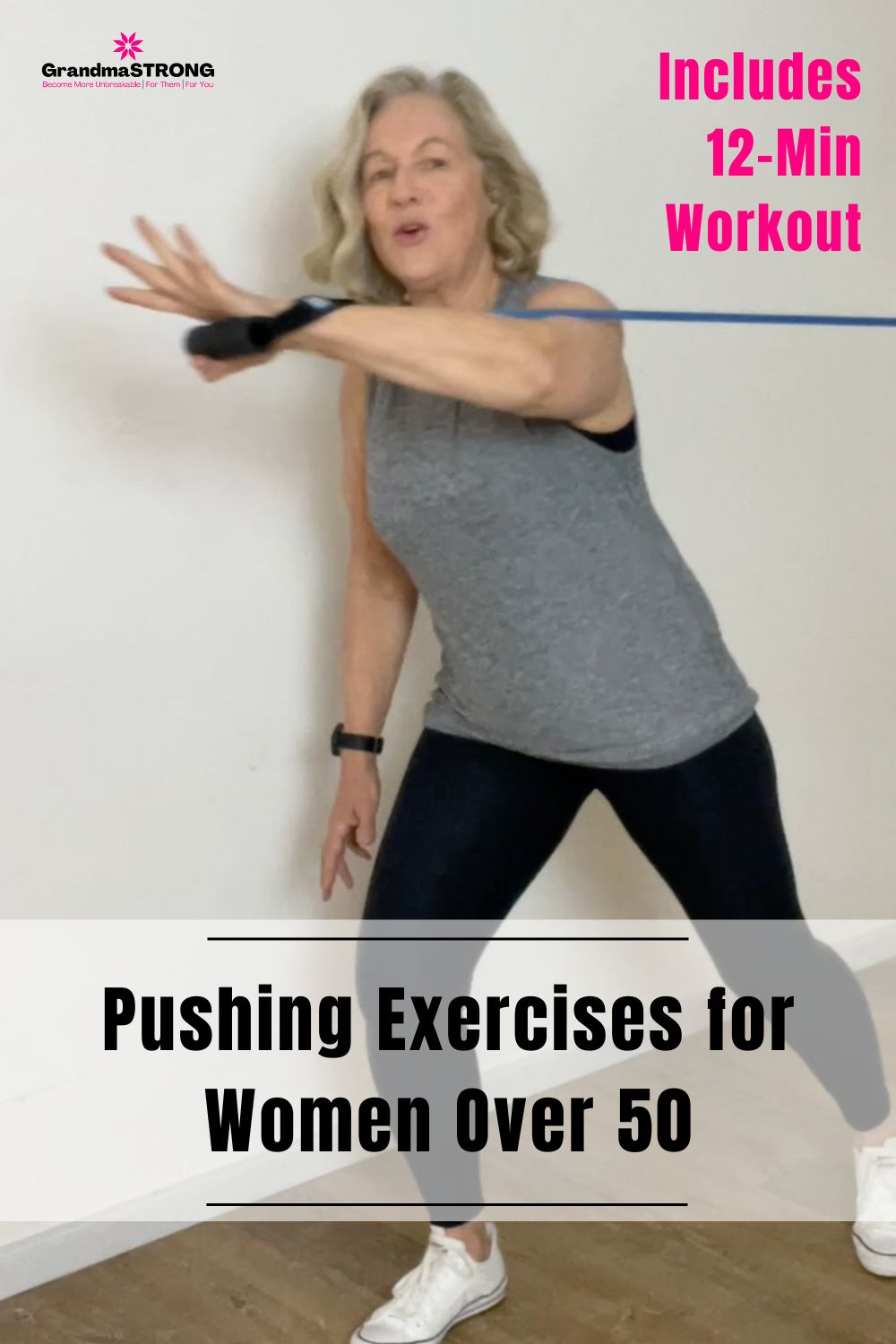
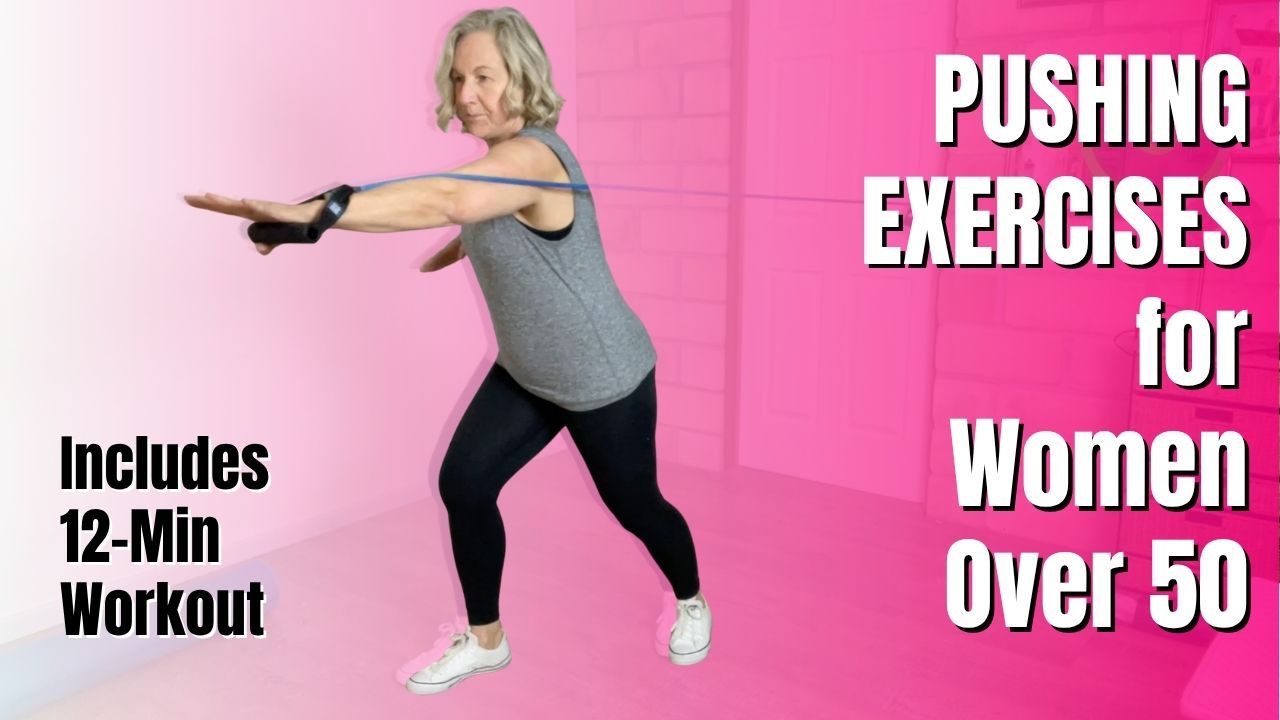
So I'm just going to demonstrate a common standing pushing forward motion, but using a band to create resistance.
Now you can be doing this with a cable weight machine if you have one. I don't have a cable weight machine so I'm just doing mine with a one arm resistance band. The idea as I turn around to press out I want to be working through my legs first so my legs need stability.
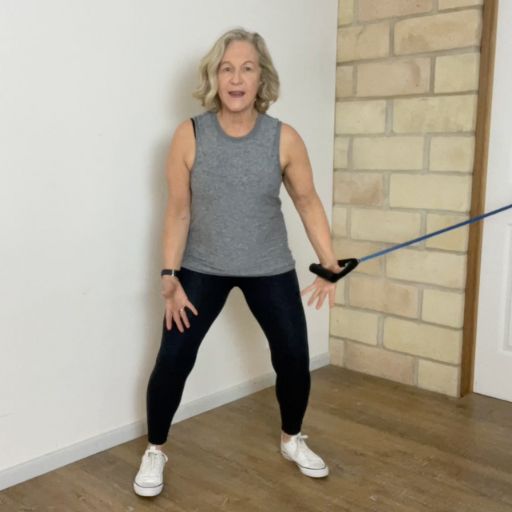
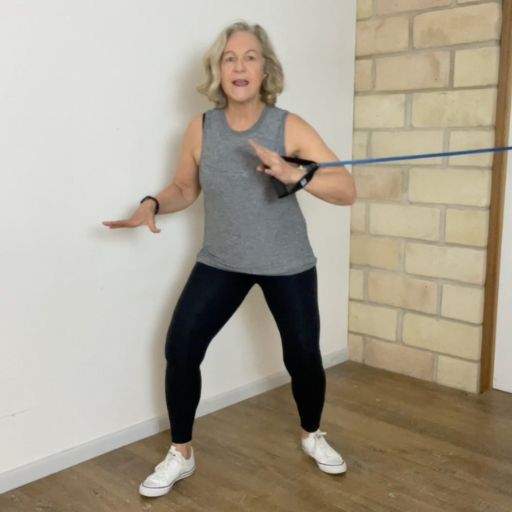
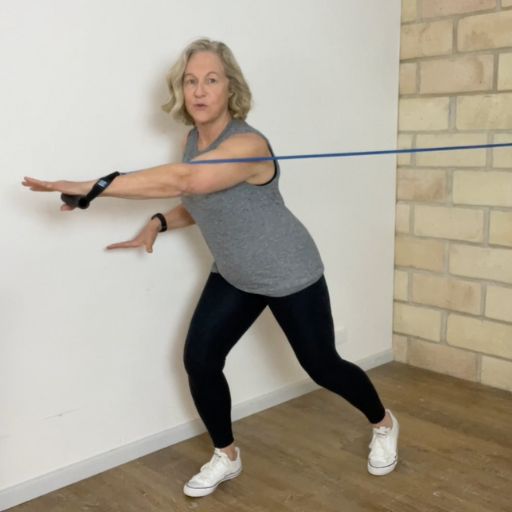
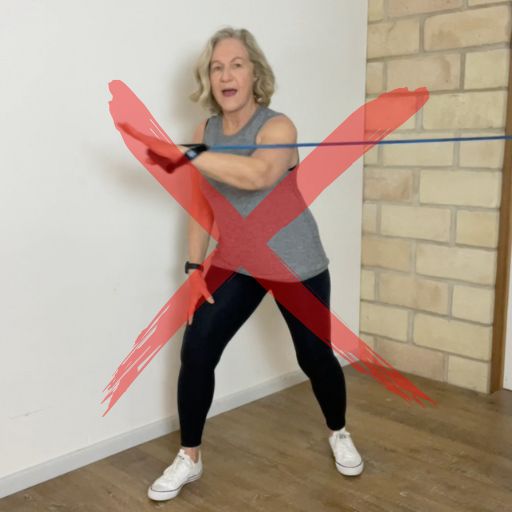
- From my legs my bigger muscles, with my core activated and as I press out my legs are first of all going to work then I've got my core on
- And then my body turning in the forward position
- I can press out knowing that I've got myself really stable before I actually press out
- Now if I'm just going to press out with my arm here and I'm not doing any other work with my body my shoulder is likely to overwork and probably get injured so I want to be able to use my whole body as I push forward.
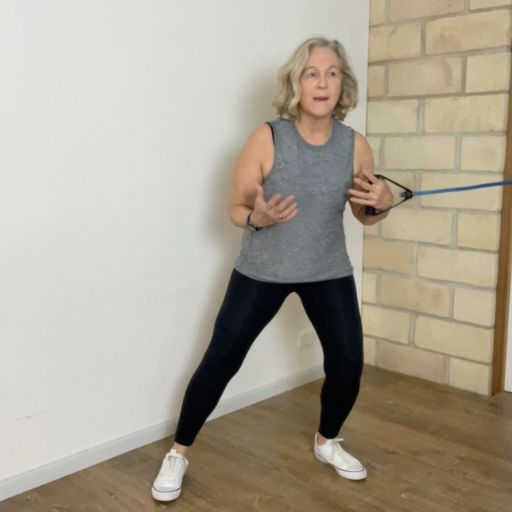
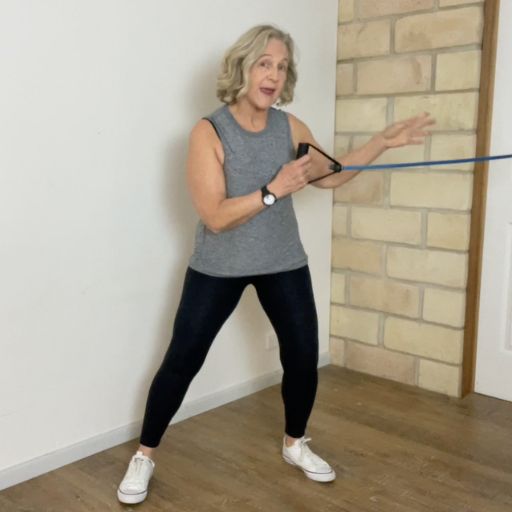
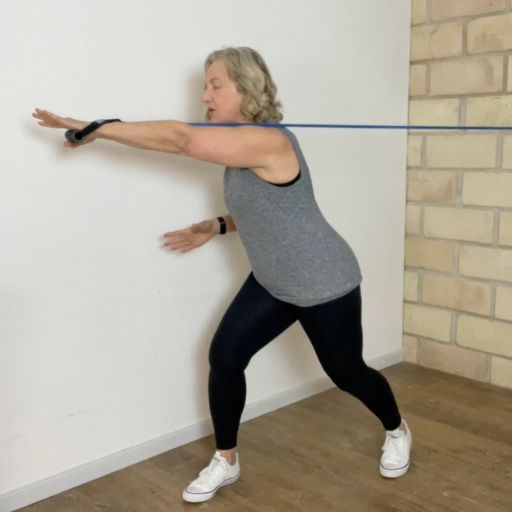
- So thinking about as I take my weight into that back leg
- The band is close to my body as I push forward. And then I'm making sure that my band is about the same height as my shoulder. I don't want the band too high or too low.
- I want it about the same height as my shoulder so I can press straight out
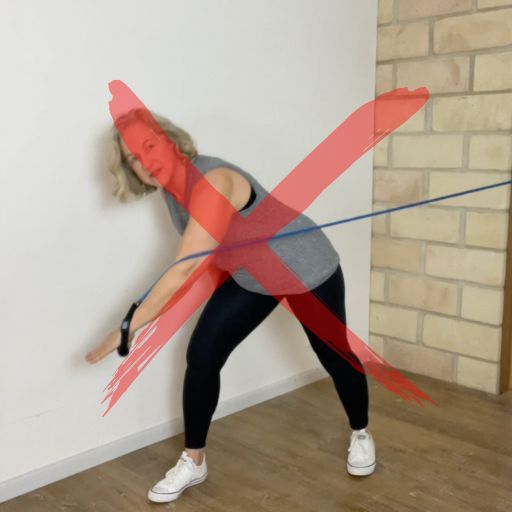
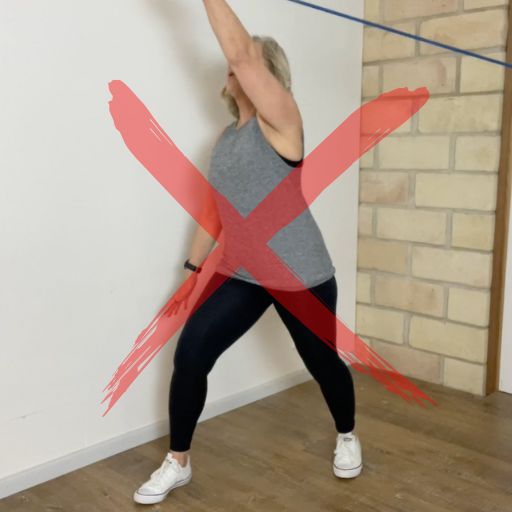
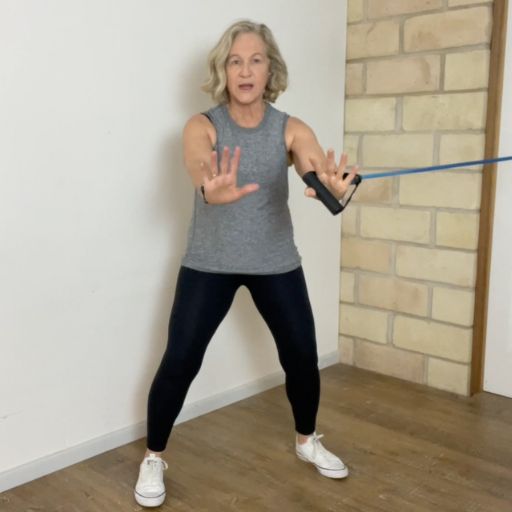
- I don't want to be pressing down
- I don't want to be pressing up
- I want to be pushing forward so most pushes will come straight out in front of you
- We can push down at times but we just want to keep all those dynamics just right. So then we're going to initiate the move from the legs to the trunk to the shoulder and the arm, that arm is in line with the attachment of the band.
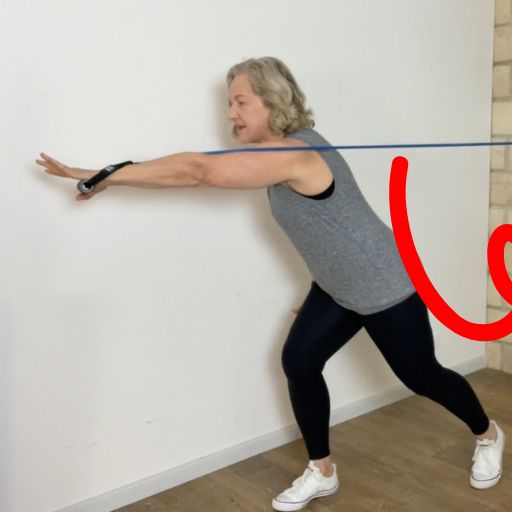
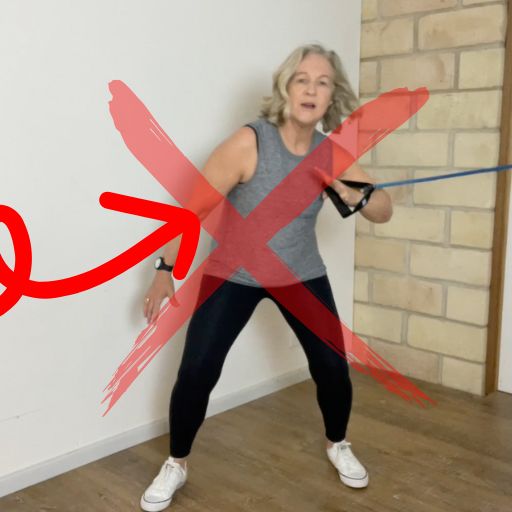
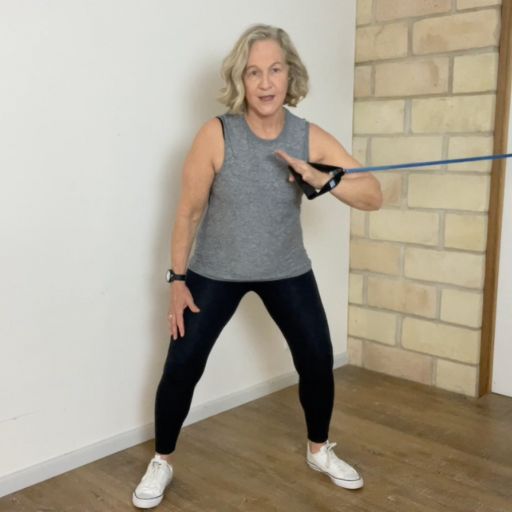
- Now don't allow that band when you turn around here to press out
- Don't allow it to suddenly pull you back because it could give you an injury
- So everything's under control as we come back and even as we push out it's all under control. We're not trying to kind of really push it out hard. Everything under control here.So we also need to think about our breathing as we push forward.
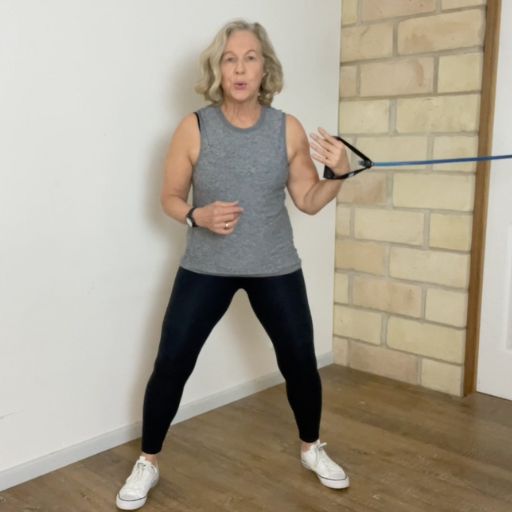
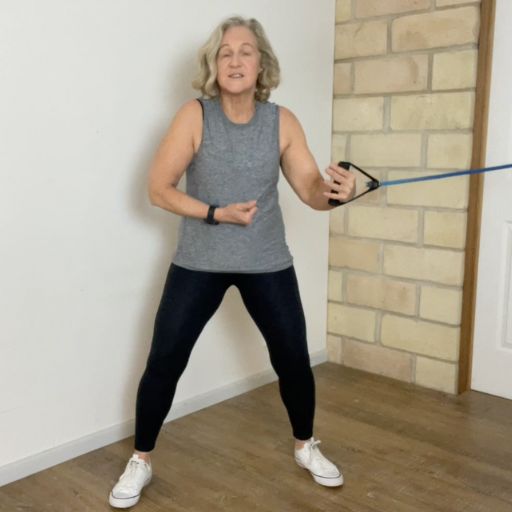
- So we're going to be breathing out through pursed lips
- It just maintains this intrathoracic pressure so that we can hold our core on
- and everything's under control
Let's have a look at how that actually works.
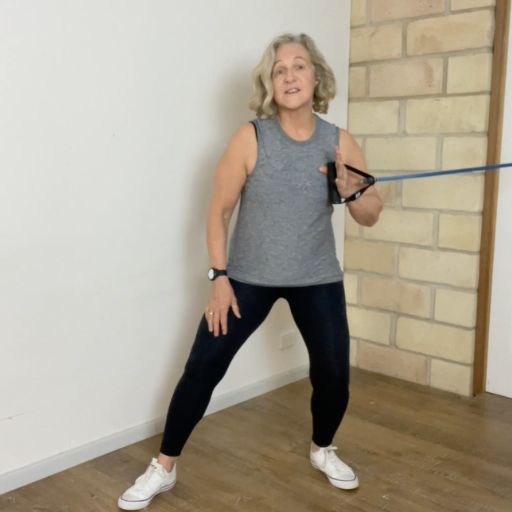
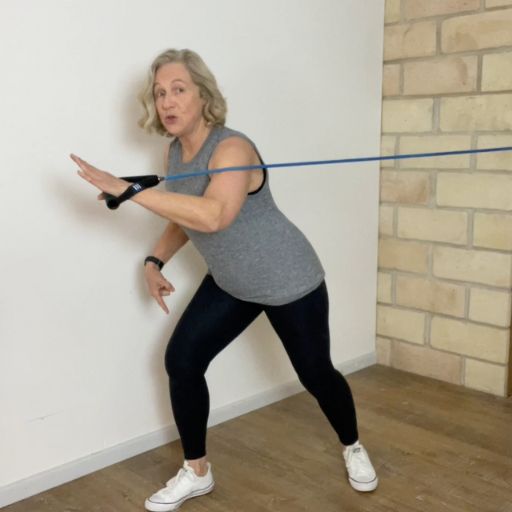
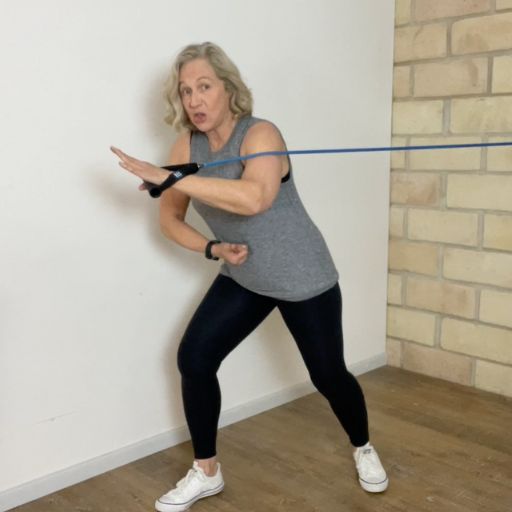
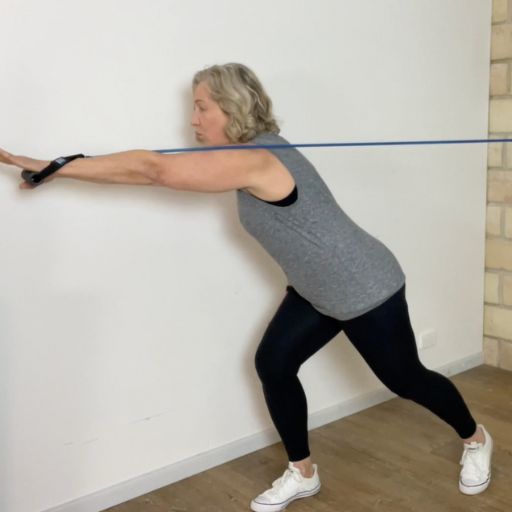
- So I'm going to be starting with the weight into my back leg
- And then as I come forward I'm using my legs first
- My core is now switching on and when that's all switched on I can feel this core working
- Then as I'm pushing forward I'm breathing out and my arm is out in a push move
There's so many ways that we can do a press but and or a push but this is just one of the ways to really start you off with the right way of doing it. If you can think about your legs working with your core and then your arms start working when that's all switched on and we're stable you should have a nice safe push that will allow you to do all sorts of things in your yard without getting injured.
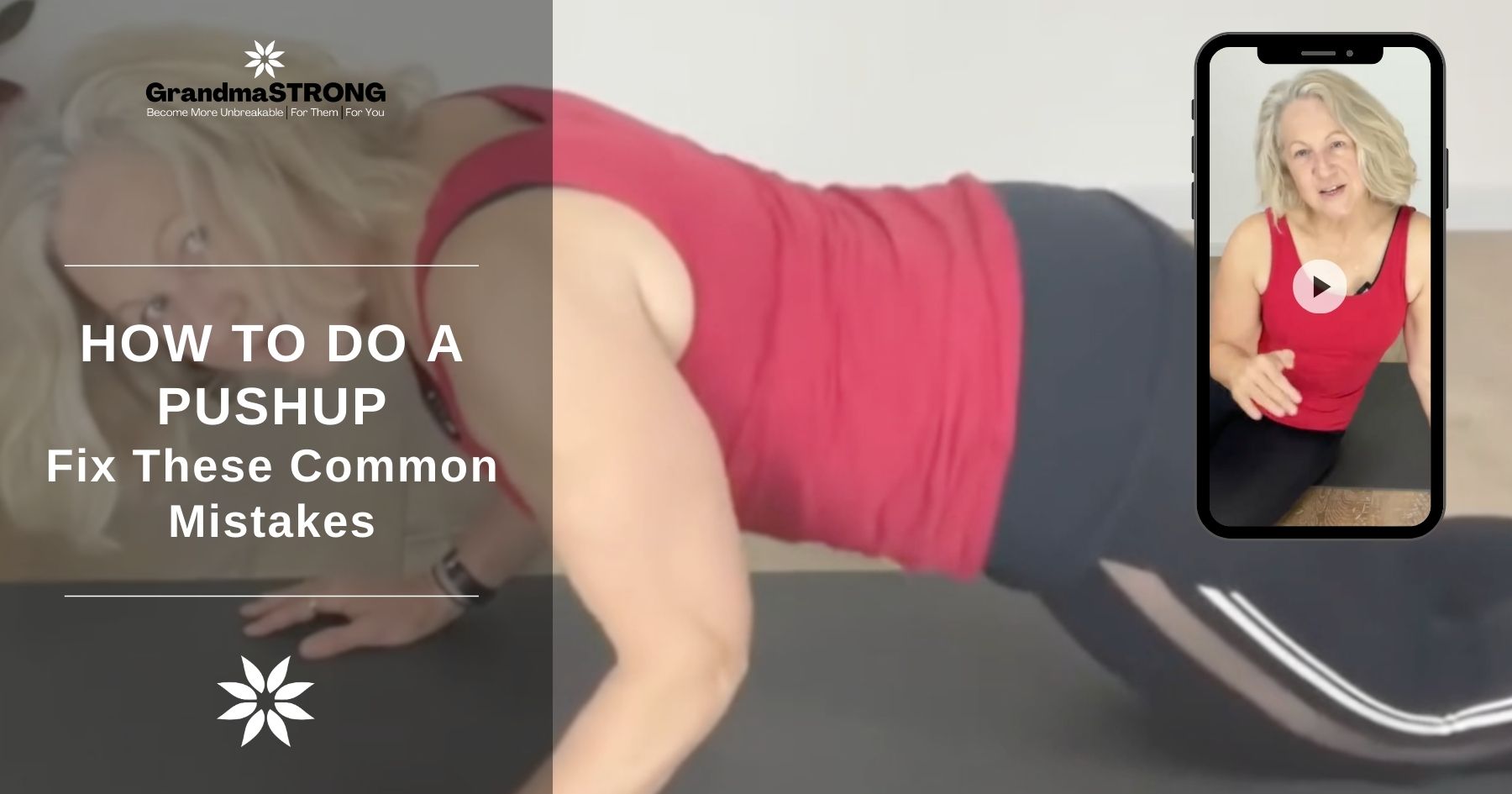
PUSH-UP EXERCISE TECHNIQUE Resource: CLICK Image/Link:
Workout: 12-Minute Repeatable Routine
Click to play
So as a push workout today we're simply going to be when we do a push-up activating this core.
So that needs to be the very first thing that we do is we push away because otherwise we'll overuse these arms and actually overuse the legs too if we're doing a squat to push up.
So we really need to be working specifically when we're working the upper body and I'm pushing something out, ensuring we're switching on that core so I've got that activated as well.
Now, enjoy these pushing exercises workout, that Coach Sheree has put together. post.
For a WARM-UP do some on the spot marching, with arms moving/swinging for 2-3 minutes before you start the workout. The warn-up intent is to simply get the blood flowing across your body and muscles.
This pushing movement workout has been designed for those who struggle with everyday push-up arm strength movements, and know they need to gain the strength and mobility to the gain freedom, independence and safety they desire.
Workout timestamps:
Timer 30 seconds workout, and 10 seconds rest between.
05:36 - Incline Narrow Push-Up
- Description: Performed with hands close together on an incline (like a table or bench), body in a straight line, and elbows tracking close to the ribs. The focus is on controlled lowering and pushing through the arms while keeping the core engaged.
- Real-Life Gain: Mimics lifting and placing items into overhead cupboards, or hoisting grandchildren into a car seat or cot. It teaches the body to move weight from ground level to overhead in one smooth motion.
- Body Strength Gain: Strengthens the triceps, chest, and deep core stabilisers, while teaching proper alignment to protect the shoulders and neck.
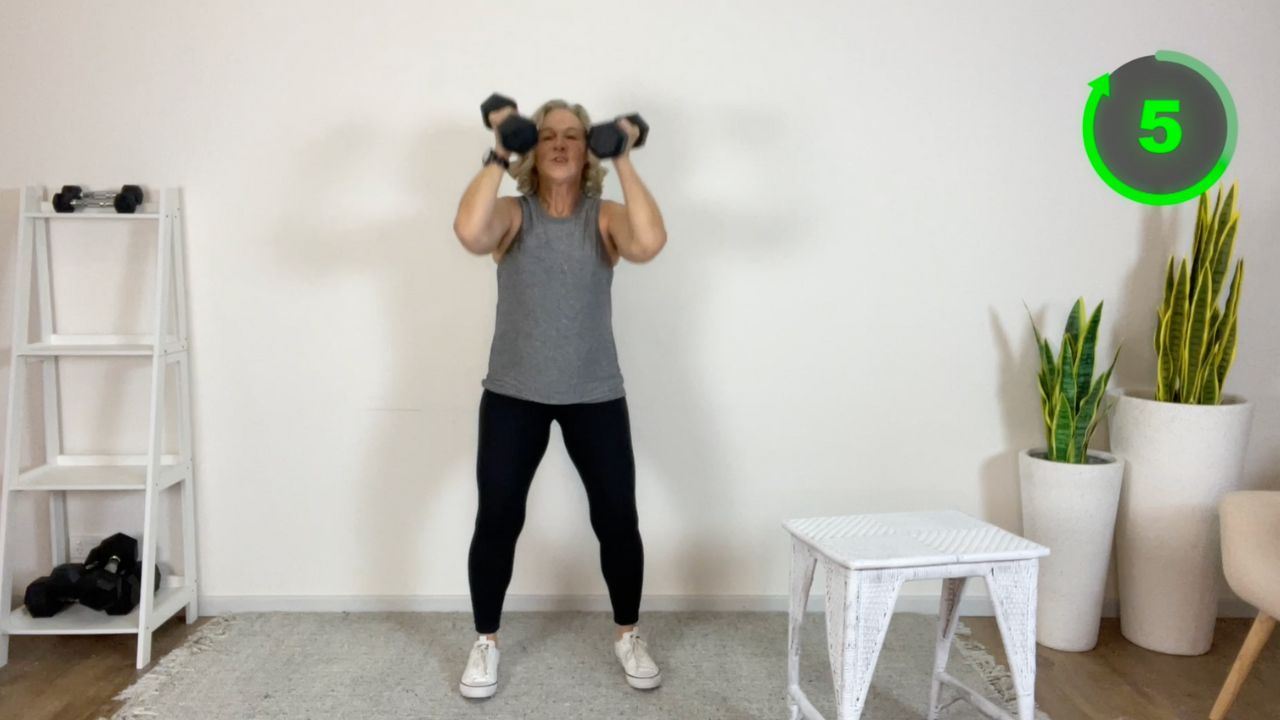
06:16 - Squat Overhead Press
- Description: A combination move where you perform a full-body squat and then press dumbbells overhead as you rise. The movement flows from legs to arms, mimicking ground-to-sky pushing.
- Real-Life Gain: Improves your ability to stand up from low chairs, toilets, or the floor using one leg at a time—especially helpful if you're holding something or limited in space.
- Body Strength Gain: Glutes, quads, and hamstrings from the squat, and shoulders, triceps, and core from the overhead press. Also supports spinal stability.
06:56 - One-Leg Squat Both Sides
- Description: Performed one leg at a time (with support if needed), this move challenges balance and strength as you sit back and then push through the heel to rise.
- Real-Life Gain: Essential for pushing yourself up off the floor, out of a bath, or off a low bench when your legs can’t do all the work.
- Body Strength Gain: Targets glutes, quads, and hamstrings on each side independently. Also improves hip stability and balance, which are key to fall prevention.
08:16 - Tricep dips
- Description: Using a sturdy chair or bench, the arms support the body as you lower and raise your torso by bending at the elbows behind you.
- Real-Life Gain: Supports strength for lifting grocery bags or household items to counter height.
- Body Strength Gain: Strengthens the triceps and shoulders, and promotes shoulder joint mobility and stability.
08:56 - Split Squat (Legs forward & back) Reverse Positions
- Description: With one foot forward and one back, you lower your body straight down in a controlled motion and push through the front heel to rise. Then switch legs.
- Real-Life Gain: Mimics walking uphill, climbing stairs, and stepping into a car. Trains the legs to push powerfully in a staggered stance, which is common in everyday life.
- Body Strength Gain: Builds single-leg strength in glutes, quads, and hamstrings, while also improving hip and knee stability.
10:16 - Wide-Armed Incline Push-Up
- Description: Push-up variation done on an incline with wider hand placement, emphasising horizontal pushing and chest engagement. Elbows track out slightly instead of staying close.
- Real-Life Gain: Useful for pushing a heavy door or cart with arms wide apart, or bracing with outstretched arms during a fall.
- Body Strength Gain: Targets the chest muscles (pectorals) more than narrow push-ups. Also works shoulders, arms, and stabilising core muscles.
10:56 - Squat with Dumbbell Pushed Forward from Chest
- Description: A squat combined with a forward press of a dumbbell from the chest. Encourages simultaneous leg drive and arm extension.
- Real-Life Gain: Mimics pushing a vacuum, shopping trolley, or large item across a surface while getting low into the legs.
- Body Strength Gain: Combines lower-body strength (glutes, quads) with upper-body pushing strength (shoulders, chest, triceps) and core control.
11:38 - Band Standing Push Shoulder Height Both Sides
- Description: Using a resistance band anchored behind, one arm at a time pushes forward at shoulder height, with core and lower body engaged to stabilize.
- Real-Life Gain: Trains the motion of pushing a door open, shoving a stroller, or using a broom or rake, all from a grounded, stable base.
- Body Strength Gain: Improves shoulder and chest strength, while also activating the obliques, transverse abdominis, and glutes for rotational stability.
12:58 - Band Standing Held Waist Height (Reverse Grip) Pushing (Scoop) Forward Right Side
- Description: With a reverse grip on a band anchored behind, the arm scoops forward and up slightly in a controlled motion, activating shoulder and arm flexors.
- Real-Life Gain: Mimics scooping groceries into the boot, or lifting a basket or bag from low to forward.
- Body Strength Gain: Works front of shoulder (anterior deltoid), biceps, and core. Adds shoulder mobility with controlled push mechanics.
13:40 - Band Standing Press Push Shoulder Height Both Sides
- Description: Classic one-arm horizontal band press, engaging through legs and core to stabilize and push with control. Alternated side to side.
- Real-Life Gain: Transfers strength to real-world actions like pushing a wheelie bin, lawn mower, or opening a heavy gate.
- Body Strength Gain: Full-chain movement involving chest, triceps, shoulders, core, and glutes. Excellent for cross-body strength and power.
15:00 - Band Standing Held Waist Height (Reverse Grip) Pushing (Scoop) Forward Both Side
- Description: Same reverse-grip scoop movement as earlier, repeated on both arms for even control and muscle balance.
- Real-Life Gain: Great for actions like pushing a laundry basket or pulling/pushing something awkward while standing stable.
- Body Strength Gain: Core-driven arm push. Emphasises anterior deltoid, biceps, and deep abdominal control under mild resistance.
16:00 - Fitball Push-Up. Shins On the Ball
- Description: Push-up variation performed with shins resting on a stability ball, which challenges balance, core, and upper-body strength simultaneously.
- Real-Life Gain: Teaches your body to push under instability—great for moments when you're off-balance or transitioning off the floor or couch with control.
- Body Strength Gain: Chest, triceps, shoulders, and deep core stabilisers (especially transverse abdominis). Adds a balance challenge to the push.
Final Thoughts
Hope you enjoyed the workout. Make sure you look at the push-up technique video above and try the push-up challenge below.
Thanks for spending time with us today.
Additional PUSHING Related Post/Video Resources: CLICK Image/Link:
Sources & Additional Reading:
- 1Correlation of muscle strength, working memory, and activities of daily living in older adults
https://www.frontiersin.org/journals/aging-neuroscience/articles/10.3389/fnagi.2024.1453527/full - 2Influence of Walking, Manual Techniques, and Elastic Resistance Exercise on Shoulder Posture in Healthy Elderly Individuals
https://www.mdpi.com/2308-3417/9/5/128 - 3Preventing Falls in Older Adults After Upper Limb Fractures: A Scoping Review
https://academic.oup.com/ptj/article-abstract/105/4/pzaf020/8029729 - 4Optimal resistance training parameters for improving bone mineral density in postmenopausal women: a systematic review and meta-analysis
https://josr-online.biomedcentral.com/articles/10.1186/s13018-025-05890-1 - 5Association Between Push-up Exercise Capacity and Future Cardiovascular Events Among Active Adult Men
https://jamanetwork.com/journals/jamanetworkopen/fullarticle/2724778