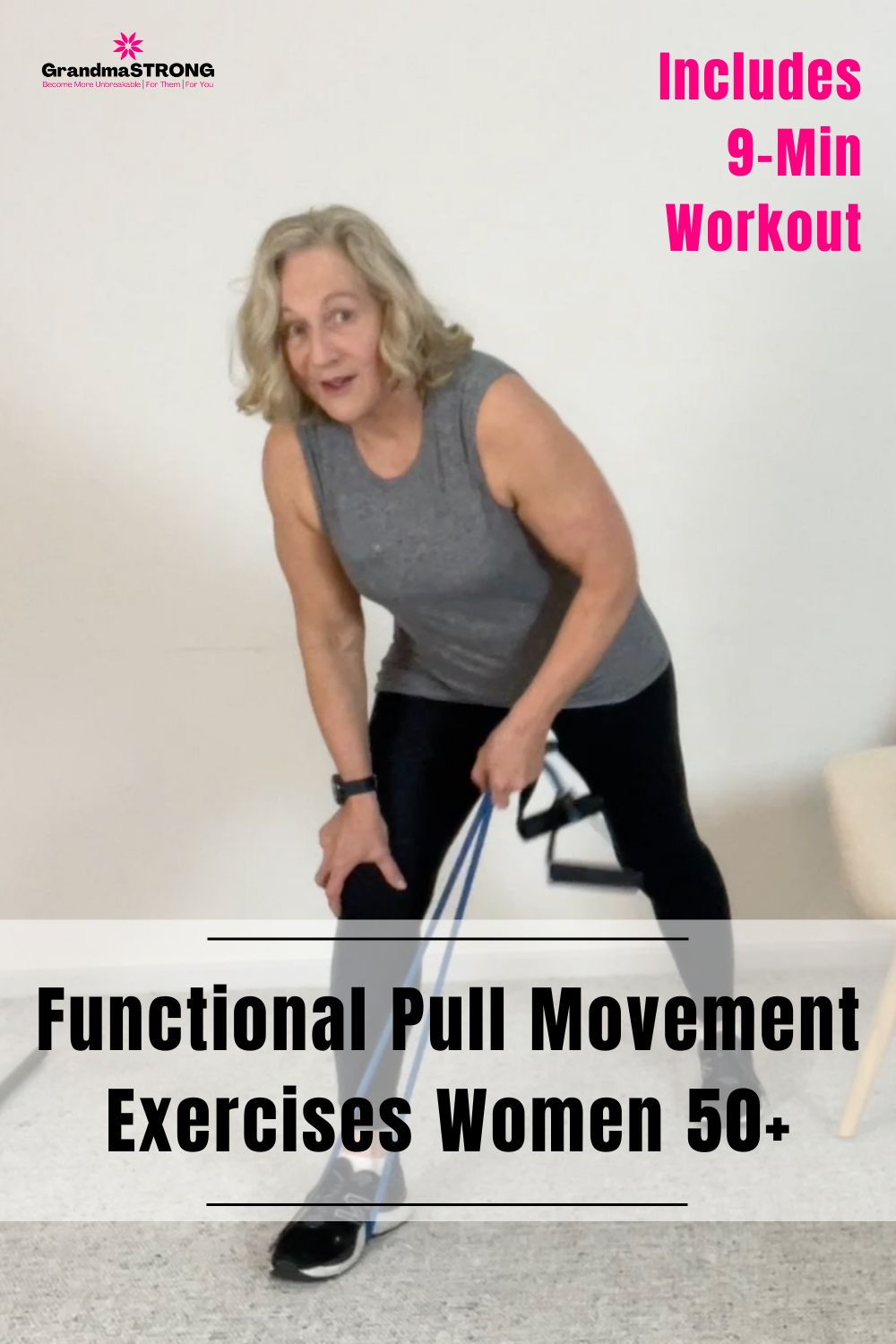

Hi there, today we're looking at pull movement exercises, one of our important everyday functional moves that works the upper back, shoulders, and the biceps.
This helps you to hoist those grandkids onto your shoulders, wrestle those weeds in the garden, and even assist in rowing a kayak if you like kayaking like I do.
I'll guide you through some simple joint-friendly moves that builds a strong back, using a kettlebell and a band today.
These exercises will allow you to stand with good posture and maintain a strong back and shoulders.
So ready to reclaim your pool and stand taller every day?
Let's dive in and take a look.
Watch: Pull Movement Exercises for Women Over 50: 9-Minute Functional Back & Arm Workout (17mins)
Press play or keep reading, either way, you’ll master this essential ADL move in under 20 minutes.
Ready, let's jump deeper into the 'Functional Pull Movement Exercises for women Over 50' lesson:
So, in this post along with the why, you'll learn some pulling exercises you can do at home, and then we'll wrap up with a simple nine-minute at-home workout that keeps you pulling well and pain-free.
WHY the "Pulling Motion" Pull Movement Exercises Matter + Real-Life Implications:
Every time you row, band-pull, or simply tug the garden hose you’re not just training muscles, you’re rehearsing independence, safeguarding your spine, and stacking the odds for an adventurous life with the grandkids. Seek to incorporate pull movement training exercises each week, to keep your shoulders mobile, and watch your posture and confidence stand a little taller.
Let's dive into the "Why" the Pull Movement matters:
1. Pulling the heavy wheelie bin to the curb, or loaded trolley:
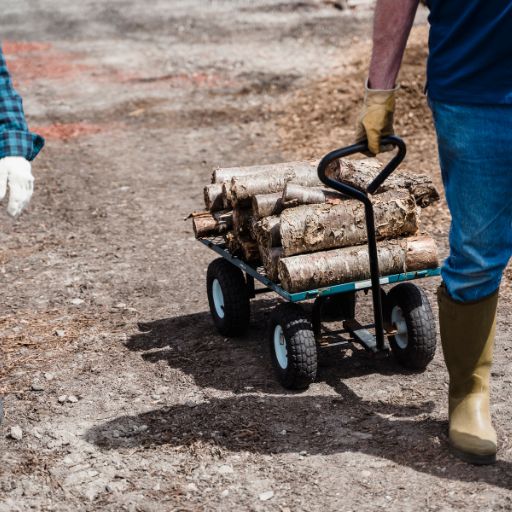
Real-life Example: You’re on the driveway, the bin’s full, and it’s heavy. Maybe it’s raining, maybe you’re tired, but it still needs to get to the street. If your back and arms are weak, this simple job can feel like a mountain.
Why's it's Important: Strong pull muscles mean you can drag that bin without hurting your back or shoulders. No needing to wait for someone else
In a 2014 research article, older adults who train with movements that copy daily jobs, (rows, carries, pulls) keep their muscle strength and independence in Activities of Daily Living longer.
2. Yanking the lawn mower or whipper snipper cord:

Real-life Example: That cord never pulls easy the first time, does it? You yank, it stops. You try again, and your shoulder’s not happy about it.
Why's it's Important: You need strong arms and a solid grip to get it going without flaring up your neck or elbow. One good pull beats five painful ones.
A 2023 study looking at handgrip strength to hold, pull and carry in older adults, found better hand-grip strength is linked to lower risk of early death, especially in women.
3. Dragging patio furniture or a fallen branch safely:
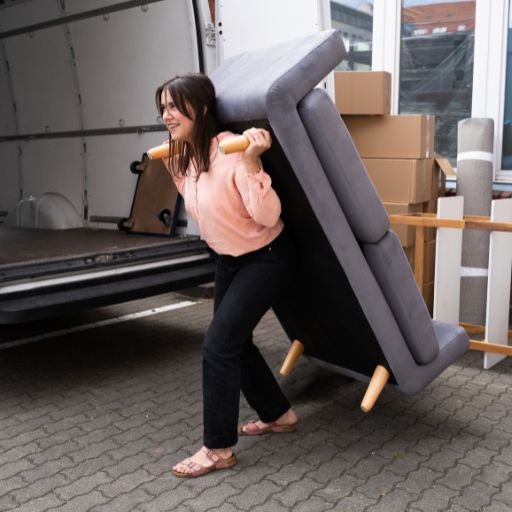
Real-life Example: You’re moving stuff around, maybe clearing a path, maybe tidying up. But now that pot or chair feels glued to the ground, and you don’t want to strain something trying to shift it.
Why's it's Important: Pulling strength helps you move heavy things safely, using the big muscles in your back and arms instead of overloading your lower back. Straining can cause injury, and that risks balance, which creates a falls risk.
The 2020 research paper on Combined balance + strength programs, found that incorporating pulling moves regularly improve back strength and cut fall risk in women 65–75yrs.
4. Standing tall instead of round shouldered:
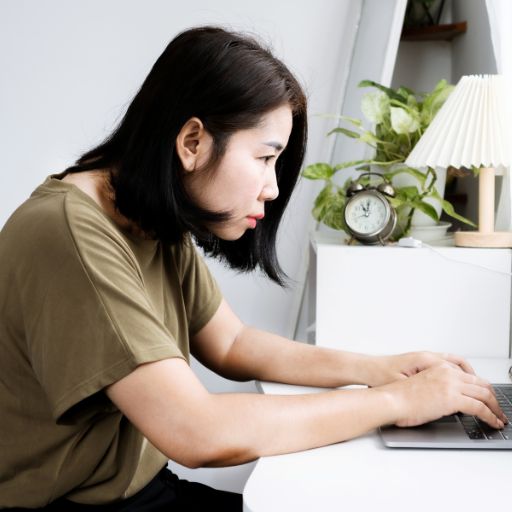
Real-life Example: You go in for a hug or you’re walking down the street, and you catch yourself slouching forward. Maybe your neck aches or your upper back feels tight.
Why's it's Important: Pulling moves wake up those forgotten mid-back muscles. They pull your posture back into place, so you breathe better, look taller, and feel more confident.
The recent research findings on hyperkyphosis, balance, and falls risk, completed 2025 found that exercise aimed at back-extensor strength reduces age-related hyper-kyphosis, while kyphosis itself is tied to higher fall risk.
5. Keeping bones break proof (bones break when you fall):

Real-life Example: You’re doing your best to stay active, but you're also thinking: “I don’t want to be the next one with a fracture from a simple fall.”
Why's it's Important: Pull movements (like band rows or weighted rows) send a message to your bones to stay strong, especially in your spine and wrists. That means fewer breaks if you trip, and more power when you need it.
A 2025 study looking at resistance training to improve bone density, highlighted data showing resistance training, especially multi-joint pulling, raises bone mineral density in post-menopausal women.
#1: How To Pull with a Resistance Band - Beginner Technique in Detail
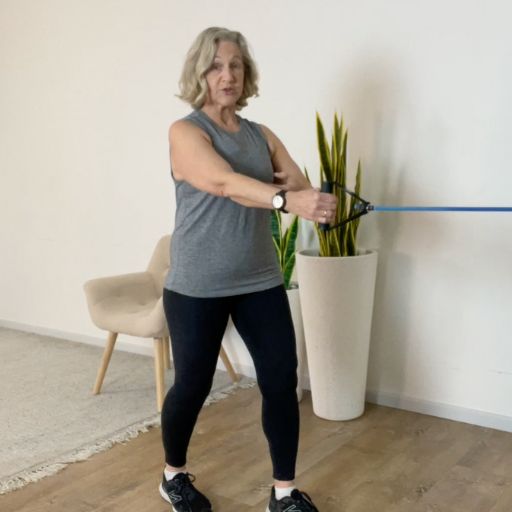
Okay, so I've got my band, I'm holding onto the band with my opposite leg out to the front.
So the same leg that's out to the back, I may as well start with it on this side. So you can see I'm just getting some stability with those legs first. So maintaining stability, don't wanna be kinda legs together.
So legs a little bit apart, so we've got some stability there, and the band will be on the opposite side to the front leg.
So then we're going to be able to move, initiate the movement with this trunk. Now to do that also, we'll need this core on.
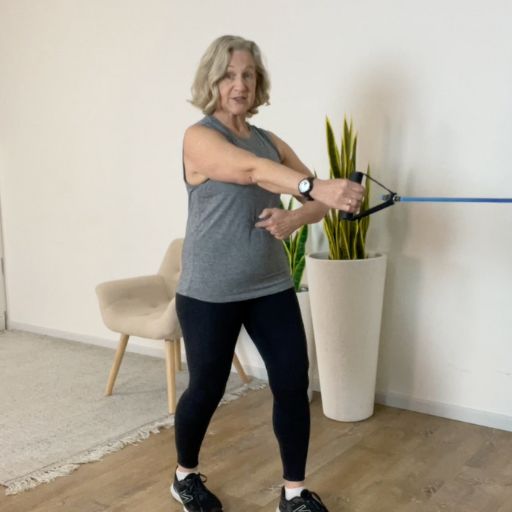
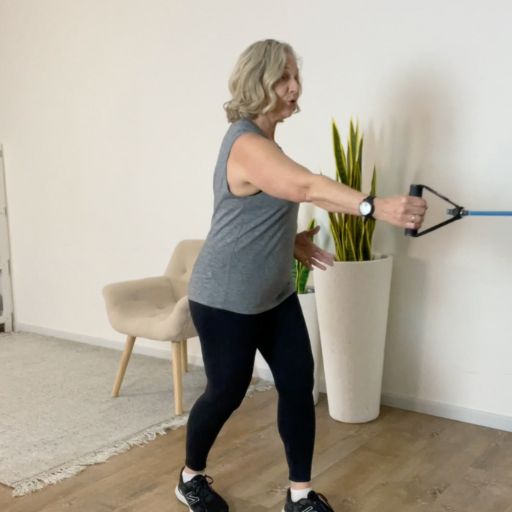
- So we're gonna have a little activation of that core
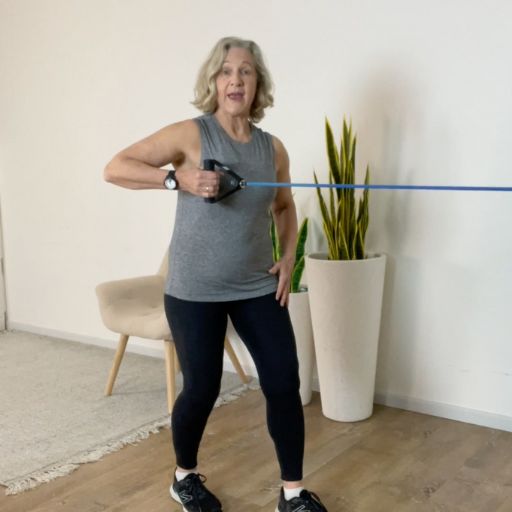
- And as we do so, we can bring this band back to our shoulder. So we're going to bring that band back to the shoulder, making sure that we keep that elbow up
- And then bringing that back as we rotate. So it's a bit of a rotation move with that as well.
And that shoulder blade, as well as pulling that elbow back, this shoulder blade around the back, our scapula, will activate at the same time. So everything moves at the same time. You don't try and activate the scapula first, the shoulder blade, then bring the arm back.
It's all a one whole movement. So as we bring that elbow back, we also bring the scapula back as well. So don't let that elbow drop if you can help it.
So coming forward and bringing this back is our pull motion with the band.
Now, if you want to make that a bit harder:

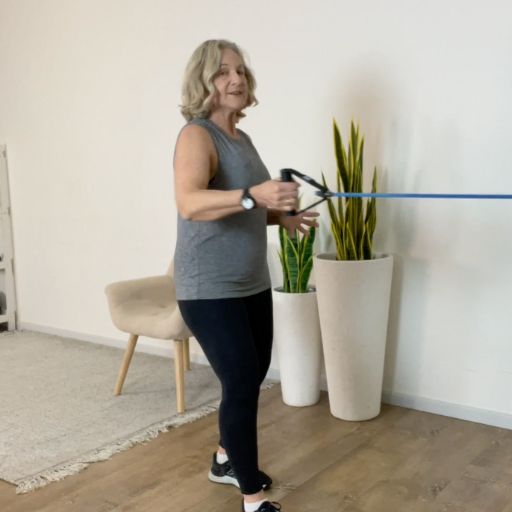
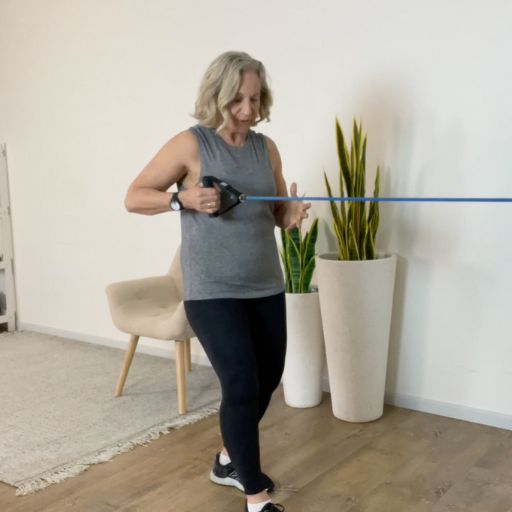
- You actually can change your leg so that the front leg is on the same side. This just creates a slightly different feel.
It's just not as easy as the other one. The other one is more stable as well. So if you're somebody that is a bit of instability, feel like you're gonna fall, better to have the other foot out to the front.
Now, we can also take that in the other hand and bring that back:
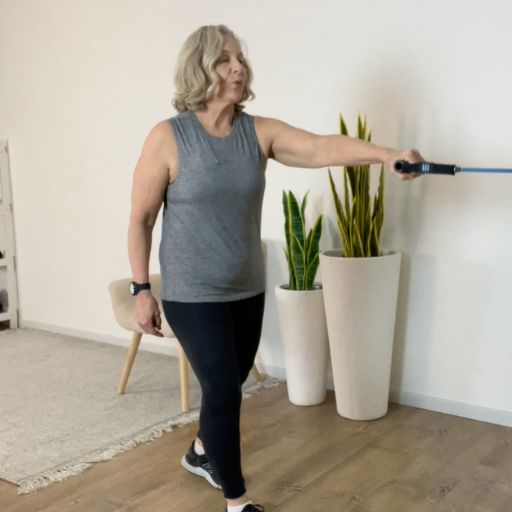
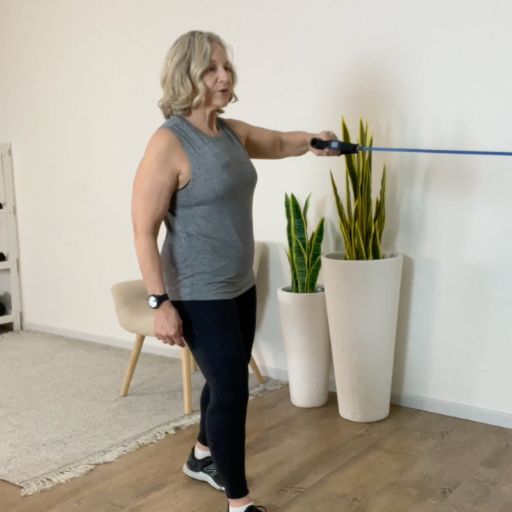

- So we'll take the other foot out to the front. And again, we're going to be thinking about stability in those legs, activating the core
- Then we're going to bring this elbow up nice and high and a little rotation there
- And as we bring that band back, we will also draw that shoulder blade back at the same time that we bring that arm back
- So this is as simple as it is for a band pull.
#2: How To Pull with a Kettlebell - Beginner Technique in Detail
Now we're going to look at a kettlebell pull. So I'm gonna be showing you a bent over row with a kettlebell.
Now, before we do anything else, we need to have this hinge perfected.

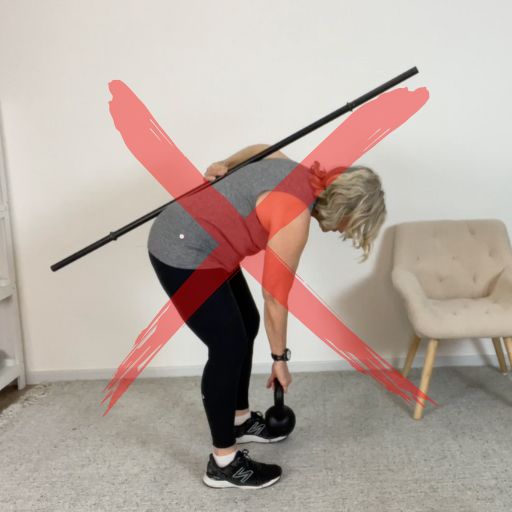
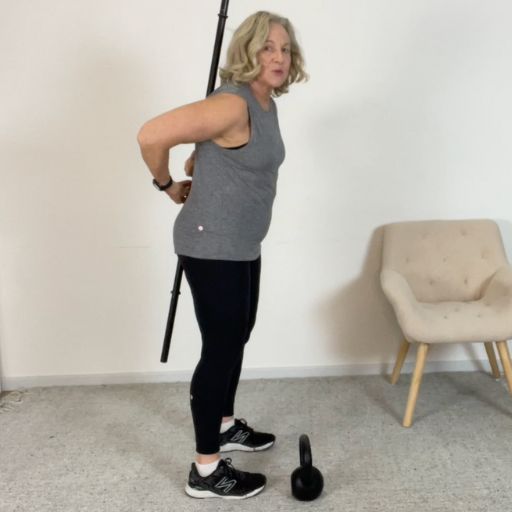
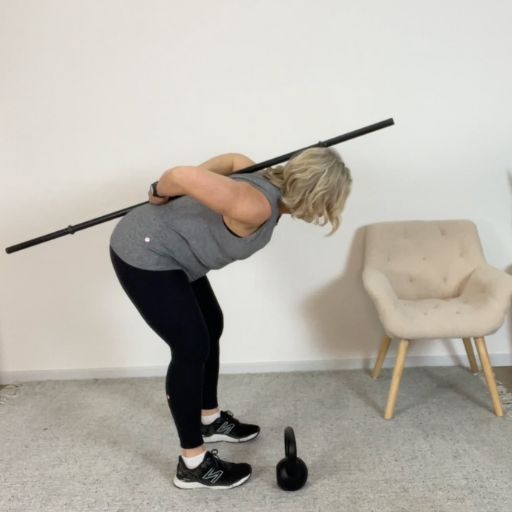
- So making sure that if you had a straight line down here
- When we come forward, we're not going to let that weight round out our back. Because if we round out our back, we're going to really take that in, the brunt of that into our lower back
- So as we come forward here, our hips drop right back and we are leaning forward
- But we are making sure that our shoulders stay back and we don't let that weight pull us forward or our head move forward
So think about a little plumb under each armpit as our hips come back. Have a think about that. And if you need to play around with that at home first, grab yourself a broomstick or a mop stick and just play around with that, with that hinge position.
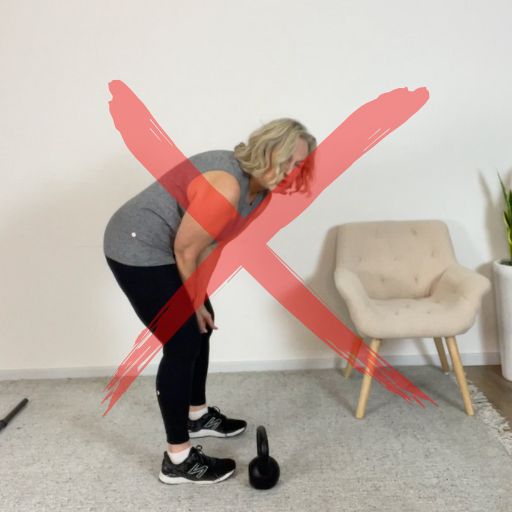
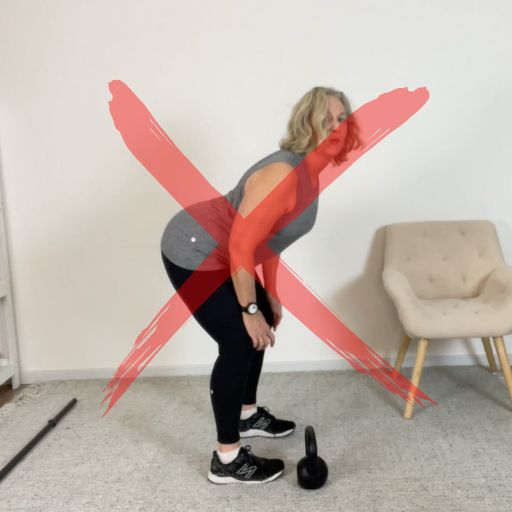

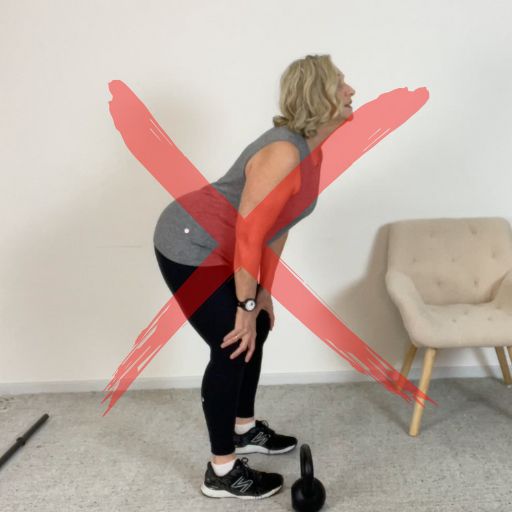
- So as we come forward, our shoulders don't round out
- And we're not going to arch that back. So we're trying to keep a neutral back, a straighter back as we can.
- And if we kept that little broomstick or mop stick down our back, it should stay in touch with our head, our shoulders and our hips. So that should stay in touch the whole time. So when we come forward, our hips come back and we are going to keep that chest up as well. So making sure that when we come forward, we're not trying to round out. So just keep that chest up.
- The head is not up here, but it's in line with the body

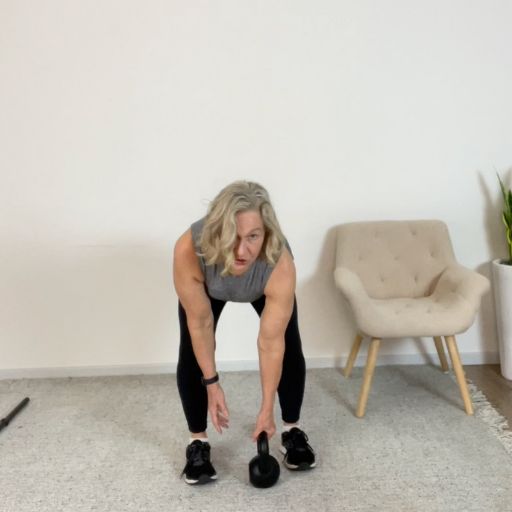

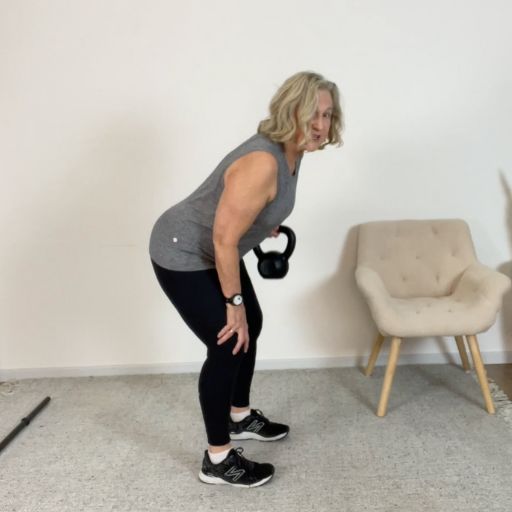
- And as we maintain that position, our core is activated. So our core is on the whole time
- So we're going to load up those heels. We're going to push the hips back
- We're going to grab this handle with one hand
- And from here, I'm going to maintain that forward position. And from here, I'm going to pull up into what's called a row.
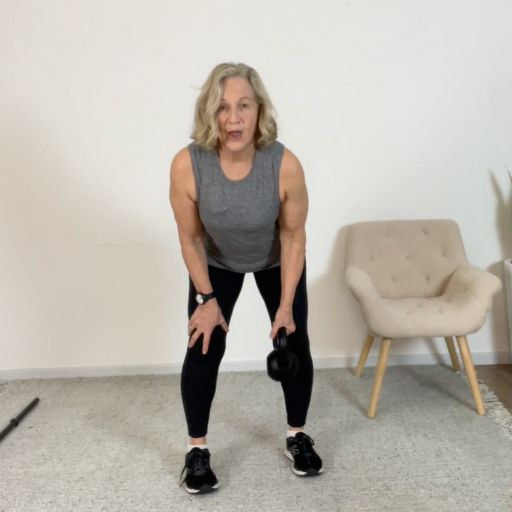
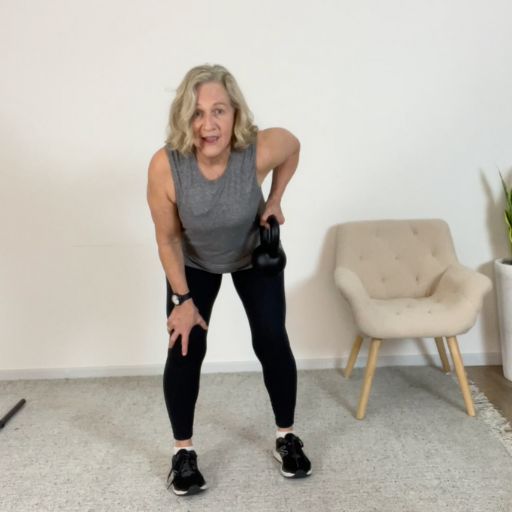
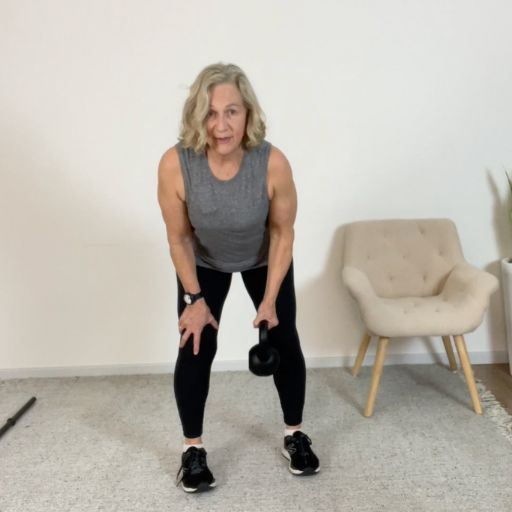
- Now, you can just stay here and not actually lean on anything. So you can have just the hand on the other leg and keeping that core on
- And we bring in this elbow straight back behind us and pulling it towards the hips
- So as we pull that, we're also activating those shoulders as well. So it's coming from the center of the body, elbow coming up back to the centre of the body and bringing that up. So keep that chest up at all times and keep that back straight
The other thing that we can be doing, we'll change it to the other hand. The same thing here, coming from the center of the body and bringing that elbow back. Great.
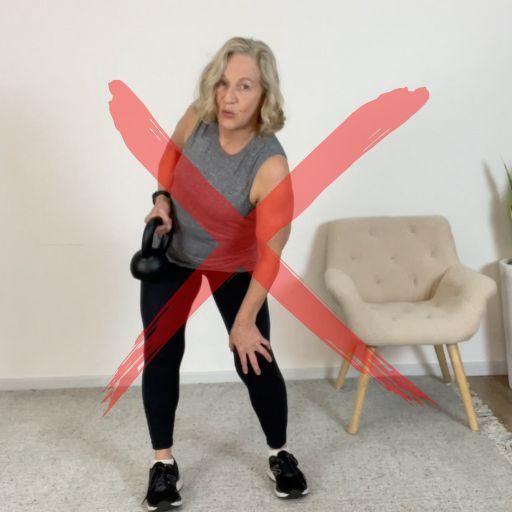

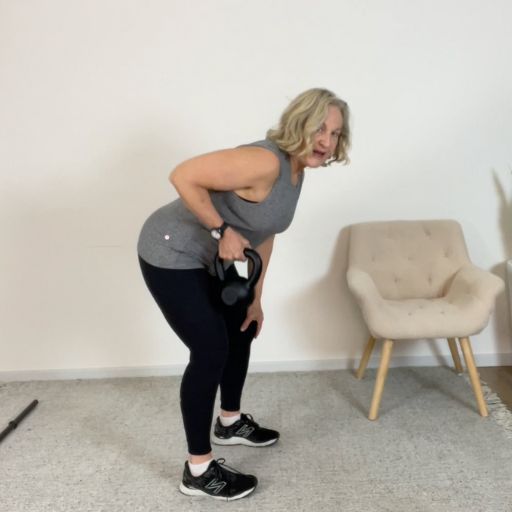
- And as we bring up, we don't want to be doing twisting, turning. We're keeping this core maintained and that back is staying straight
- So you don't want to be coming up each time you roll as well. You don't want to be coming up
- You want to be staying down here in that forward position. And that can be a hard one to stay in thinking about your core on the whole time.
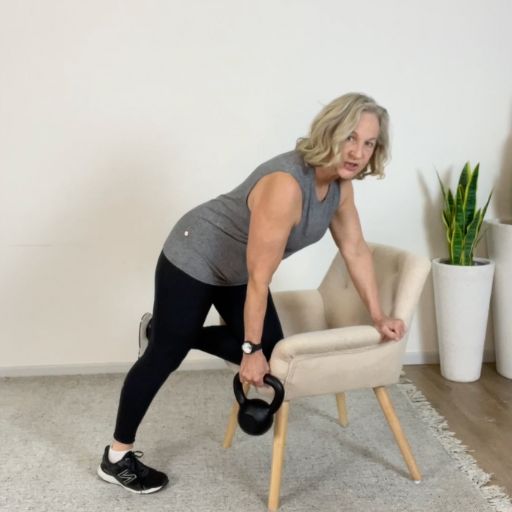
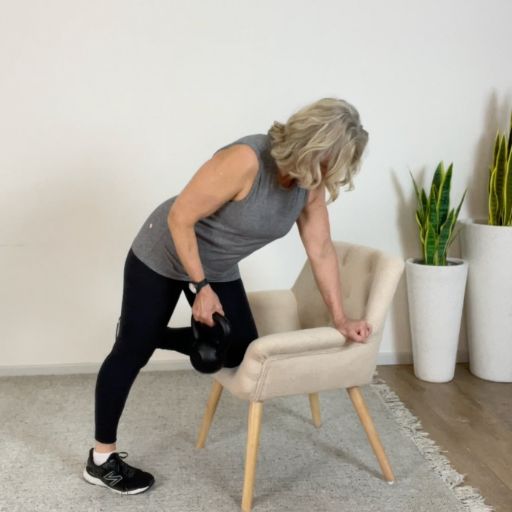
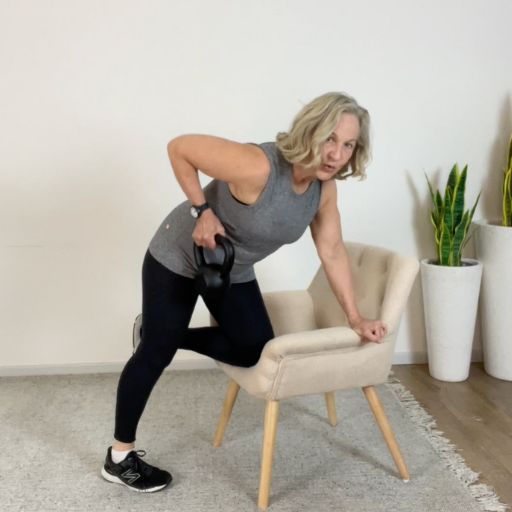
- Now, if you had a chair, a bit harder with my chair because it's got handles on it, but you can take a knee here.
- You can take a knee on the chair and coming forward
- Again, you want that back straight. And from here, we can be taking up a nice row as well.
So really just thinking about that core on. And if we had that broomstick or mopstick down our back, we're going to find that that stays nice and straight. And either way, you will be working that whole upper back and shoulders.
It's a pretty intense move actually. Now that you know how to do that, let's get into a short workout, doing some pull motions.
Workout: 9-Minute Repeatable Routine
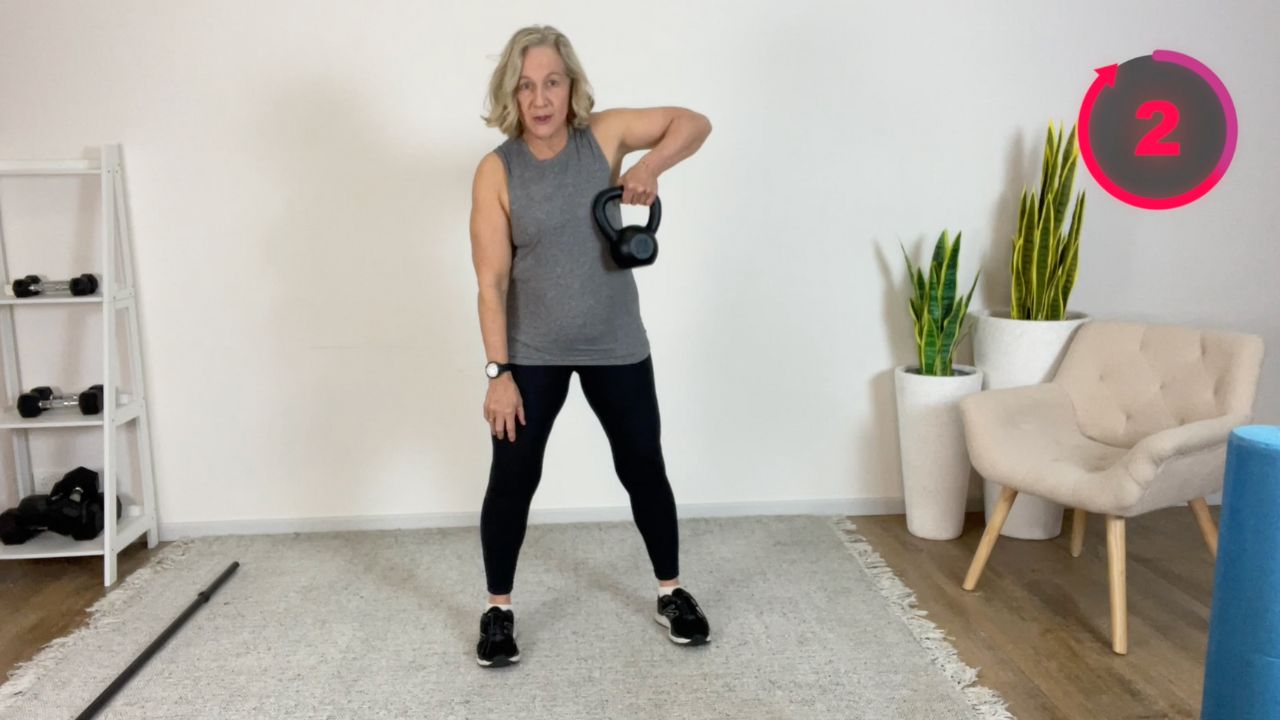
Click to play
Now, enjoy these pull movement exercises workout, that Coach Sheree has put together. post.
For a WARM-UP do some on the spot marching, with arms moving/swinging for 2-3 minutes before you start the workout. The warn-up intent is to simply get the blood flowing across your body and muscles.
This pulling movement workout has been designed for those who struggle with everyday pushing arm, shoulder and back strength movements, and know they need to gain the strength and mobility to the gain freedom, independence and safety they desire.
Workout timestamps:
Timer 30 seconds workout, and 10 seconds rest between.
Equipment Needed: Kettlebell and Resistance Band
07:09 - Bent Over Single Arm Rows (Both Sides - Kettlebell)
- Description: Bend forward with one hand supported on your leg or a bench, and row the kettlebell up to your side like you’re starting a lawnmower.
- Real-Life Gain: Helps you lift heavy shopping bags or pick up your grandchild without straining your back.
- Body Strength Gain: Builds upper back, lats, and biceps while also training your core to stay steady.
08:29 - Bended to Stand Single Arm High Pulls (Both Sides - Kettlebell)
- Description: Start low with the kettlebell, then pull it up high to your chest as you stand tall.
- Real-Life Gain: Trains your body to lift something off the ground and bring it up close, like lifting a full laundry basket or toolbox.
- Body Strength Gain: Builds full-body coordination, leg power, shoulders, and pulling strength.
09:49 - Standing Kettlebell Both Arms Upright Rows
- Description: Hold the kettlebell with both hands and pull it straight up toward your chin with elbows wide.
- Real-Life Gain: Makes reaching and pulling things toward you easier, like pulling a heavy door shut or reeling in a hose.
- Body Strength Gain: Strengthens shoulders, traps, and arms for powerful upward pulls.
10:29 - Standing Kettlebell Hammer Curls
- Description: Hold the kettlebell with two hands and curl it up like lifting a bucket with both arms.
- Real-Life Gain: Helps with lifting anything you carry close to your chest, like a big cooking pot or full laundry basket.
- Body Strength Gain: Works biceps, forearms, and grip strength, improving elbow and wrist power.
11:09 - Chair Assisted Bent Over Single Arm Rows - Kettlebell
- Description: Use a chair for support while you row the kettlebell up on one side, perfect if you need help balancing.
- Real-Life Gain: Makes lifting from awkward positions safer, like grabbing something low from the boot of the car.
- Body Strength Gain: Builds upper back and arms while giving balance support to reduce strain.
12:33 - Band Standing Arm Pulls (Opposite arm anchors band)
- Description: One arm holds the band steady while the other pulls it across your body in a rowing motion.
- Real-Life Gain: Helps with pulling things sideways, like tugging a stuck drawer or closing the car door in the wind.
- Body Strength Gain: Works the mid-back, shoulders, and core with a focus on anti-rotation control.
13:53 - Band Split leg Bent Over Row (Anchored under front foot)
- Description: Stand in a split stance, bend forward, and pull the band up using both arms while anchoring it under your front foot.
- Real-Life Gain: Helps with lifting something heavy while standing unevenly, like pulling a suitcase out of the back seat.
- Body Strength Gain: Builds back, arms, legs, and balance all at once in a realistic body position.
15:13 - Band Standing Upright Rows Both Sides (Anchored under foot)
- Description: Pull the band up toward your chin from a standing position, keeping elbows higher than your wrists.
- Real-Life Gain: Helps with pulling things up toward you, like lifting a crate or box from the ground.
- Body Strength Gain: Builds upper shoulders and arms, plus grip control.
15:53 - Chair Seated (or floor) Crossed Band Rows (Anchored under both feet)
- Description: Sit on a chair with legs out, band crossed under your feet, and pull it like rowing a boat.
- Real-Life Gain: Mimics the movement of pulling something toward you while seated, like shifting boxes or sliding laundry baskets.
- Body Strength Gain: Strengthens lats, mid-back, and biceps while improving seated posture and spinal control.
Final Thoughts
So, I don't know about you, but I can certainly feel my shoulders have worked.
I hope you enjoyed that. And it's really to just give some educational guidance on what a pull actually involves and what you should be feeling.
So, I hope you enjoyed that. Let me know in any comments and I'll see you next time.
Sources & Additional Reading:
- 1Systematic review of functional training on muscle strength, physical functioning, and activities of daily living in older adults
https://eurapa.biomedcentral.com/articles/10.1007/s11556-014-0144-1 - 2Handgrip strength is associated with mortality in community-dwelling older adults: the Yilan cohort study, Taiwan
https://bmcpublichealth.biomedcentral.com/articles/10.1186/s12889-023-17058-9 - 3Effects of Combined Balance and Strength Training on Measures of Balance and Muscle Strength in Older Women With a History of Falls
https://www.frontiersin.org/journals/physiology/articles/10.3389/fphys.2020.619016/full - 4The effects of Hyperkyphosis on Balance and Fall Risk in older adults: A Systematic Review
https://www.sciencedirect.com/science/article/abs/pii/S0966636225000955 - 5Optimal resistance training parameters for improving bone mineral density in postmenopausal women: a systematic review and meta-analysis
https://josr-online.biomedcentral.com/articles/10.1186/s13018-025-05890-1