
Now, for most of us, gait is probably okay. We walk fine, we have no problems and we feel good after we've gone for a walk or a run.
But if like me, you have experienced bunions that have gotten bigger as you've gotten older and I'm choosing not to have them operated on at this point in time, then that could be a problem.
Gait issues will show up in a variety of ways for women 55+:
- keeping pace with grandkids without hip or knee niggles
- crossing streets confidently when the gap appears
- handling hills, curbs, and uneven garden paths without a wobble
- carrying groceries or a beach bag while staying upright
- and having the “brakes” to decelerate safely if a toe catches.
So having a better gait means less back tension, fewer trip points, and more endurance for markets, travel days, or charity walks.
Now let's take a deep dive into the why and how, before we finish with a nine minute gait strength and mobility workout.
Watch: Walk Tall After 50 & 9-Minute Gait Training Exercises for Women Over 50
ALL Bodyweight
Ready, let's jump deeper into the 'Gait Training Exercises' lesson:
So, in this post along with the why, you'll learn gait exercises for beginner you can do at home, and then we'll wrap up with a simple nine-minute at-home workout that keeps you lunging well and pain-free.
WHY Training Gait Exercises Matter + Real-Life Implications:
Taking the time to consider and/or assess your gait movement really matters, because walking is your daily “strength test” in disguise, every step asks your hips, knees, ankles, core, and brain to coordinate power, balance, and rhythm.
When we train gait, think posture reset, arm swing, hip extension for push-off, ankle mobility, single-leg control, and cadence, we turn shuffling into striding: longer steps, quicker reactions, and steadier turns.
Let's look at 5 reasons why taking time to focus on improving your gait is important:
1. Pushing a Pram Uphill:
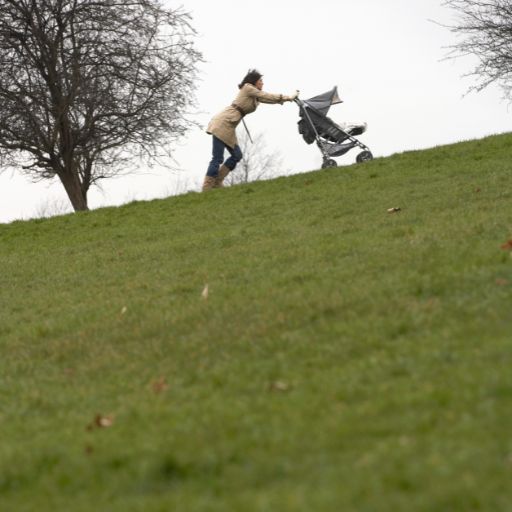
Real Life Example: When you’re pushing a pram or heavy trolley up a hill, your back leg has to drive, that’s hip extension, so your body glides forward instead of folding at the waist.
Why It's Important: Strong glutes = confident inclines, safer road crossings, and less low-back crankiness. Hip extension power is your “throttle” for walking speed and stability on slopes.
Electromyography, EMG studies show uphill walking significantly increases gluteus maximus activation versus level ground, exactly the muscle we’re training with hill repeats, bridges, and hip thrusts. Expect better propulsive push-off and a taller posture on inclines.
2. Travel Sightseeing Marathons:
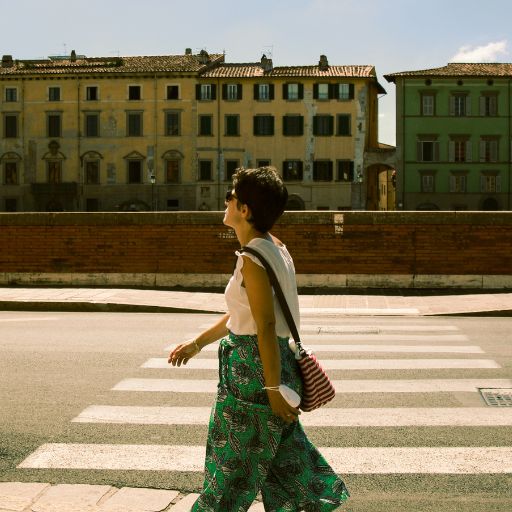
Real Life Example: Those “all-day on your feet” trips, markets, museums, city blocks, ask your quads to absorb shock with every step and keep your knees tracking strong for hours.
Why It's Important: Quad endurance protects cranky knees, keeps your pace steady when fatigue wants to slow you, and makes “one more block” feel easy.
In older adults, knee extensor (quadriceps) strength is strongly associated with better fitness tests (6-minute walk, obstacle walk), meaning stronger quads = more distance with less effort.
3. Steady Footing on Slippery Surfaces:
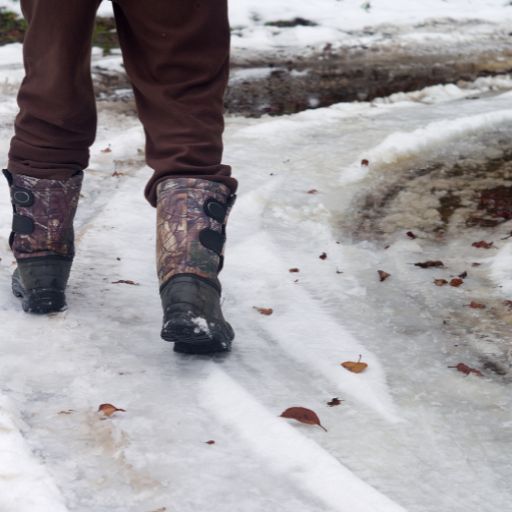
Real Life Example: On slick paths or wet decks, your calves and ankles act like shock-absorbing “springs,” gripping the ground, stiffening at the right moment, and giving you a controlled push-off.
Why It's Important: Better plantar-flexor (calf) strength improves balance reactions, shortens that “whoa” wobble, and helps you place your foot exactly where you intend.
A systematic review found ankle plantarflexor strength is positively associated with balance and walking speed—two pillars of fall resistance. Add loaded calf raises and suitcase/farmer carries on toes to your weekly mix.
4. Turning Quickly to Respond to a Child:
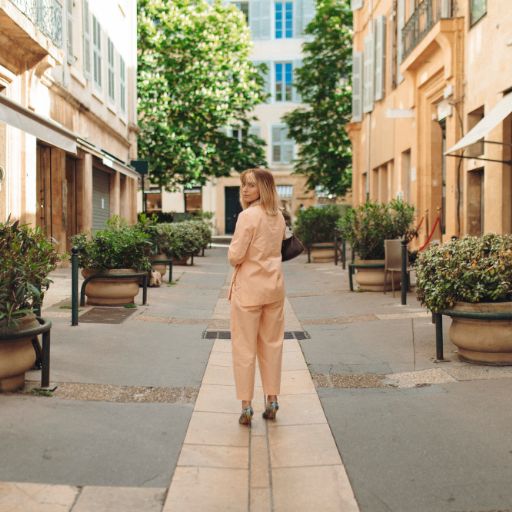
Real Life Example: Real life isn’t a straight line, when a little voice calls “Grandma!”, you pivot, step, and change direction in a heartbeat, keeping your ribs stacked over your hips and your core braced.
Why It's Important: Many stumbles happen in the turn, not the straight, good trunk and pelvic control keeps your center of mass over a solid base while you pivot.
A 12-month cohort of community-dwelling older adults found that natural turn measures predicted future recurrent falls. Prospective fallers turned less frequently, took longer to turn, and needed more steps per turn; importantly, falls during turning were reported to cause ~8× more hip fractures than straight-line falls.
5. Navigating Rocky Paths & Walks:
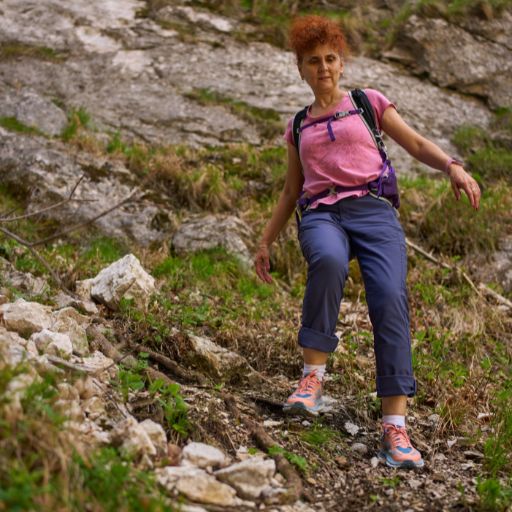
Real Life Example: Uneven stones, roots, and gravel ask your ankles to bend (dorsiflex) and your hips to open so you can clear each step without toe-catching or side-lurching.
Why It's Important: Adequate ankle dorsiflexion and hip mobility mean longer, smoother steps, better shock absorption, and fewer “trip points” when the ground gets cheeky.
In community-dwelling older adults, greater ankle mobility is linked to better dynamic balance and mobility (e.g., faster Timed Up & Go). Keep ankle rocks, knee-over-toe lunge tests, and hip-flexor openers in your warm-ups.
Unpacking the Gait Movement: A Beginners Perspective
So let's look at some basics of gait. So with gait, we need to stand tall. I always tell you to my clients, act like you're the queen of Sheba.
I'm walking into the store and this is one time I always do it. I get out of my car. I think I've got a crowd around me and they're all looking at the way I walk and I walk tall.
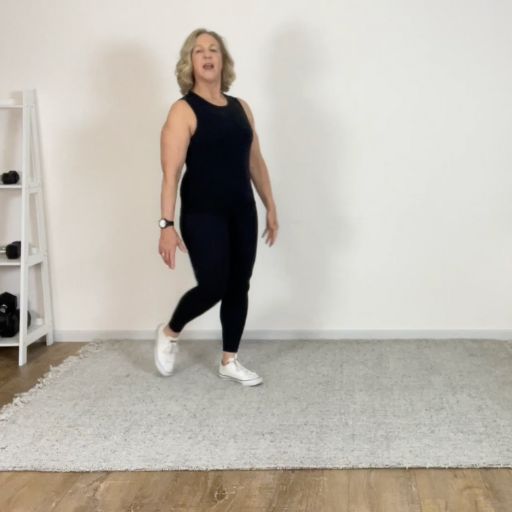
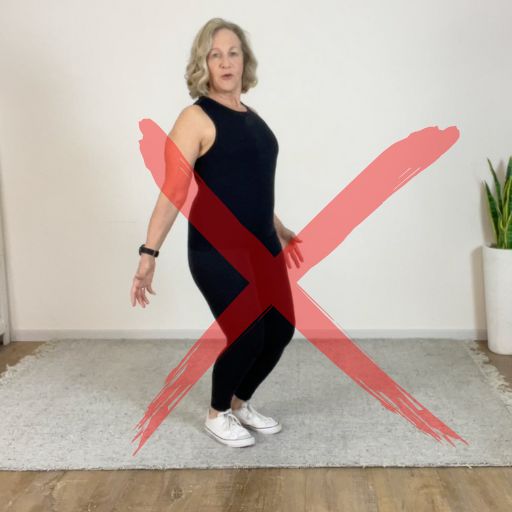
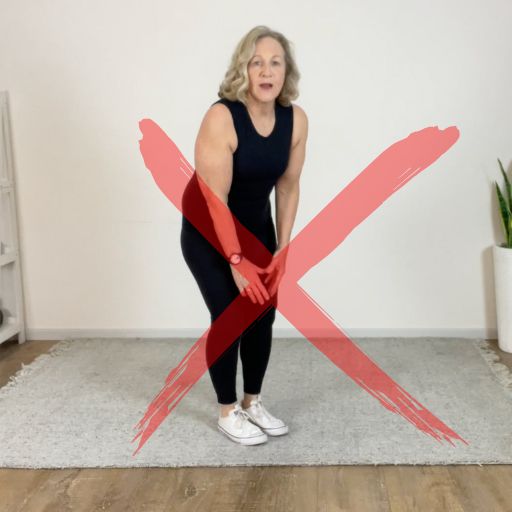
- So as I walk into the shops, I'm walking with my shoulders back and I feel good. So I'm really putting that air of pride as I walk in
- Not slumped, not hunched over. So we need to stand tall firstly, our chest needs to be up and as we walk along, try not to look down too much.
- I know it's harder when you're in the bush and going on a hike, but try to look just ahead of you. So a couple of meters ahead of you so that we're not looking down all the time. Our shoulders need to be back, not way back, over back, not hunched forward.
- And particularly this is going to be hard for some of you who already have forward round shoulder position from maybe being at the desk too much. Try and get those shoulders back so they're in a comfortable position and they look good.
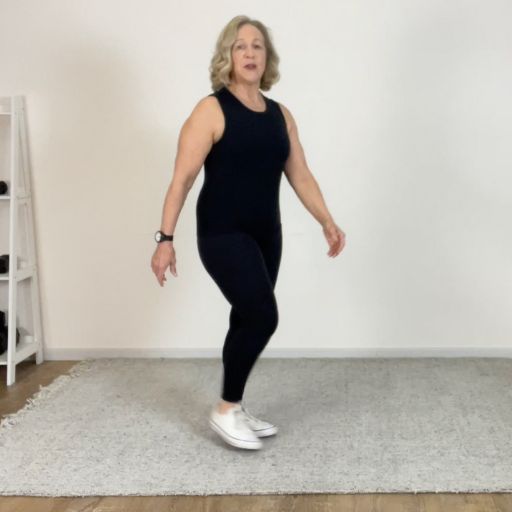
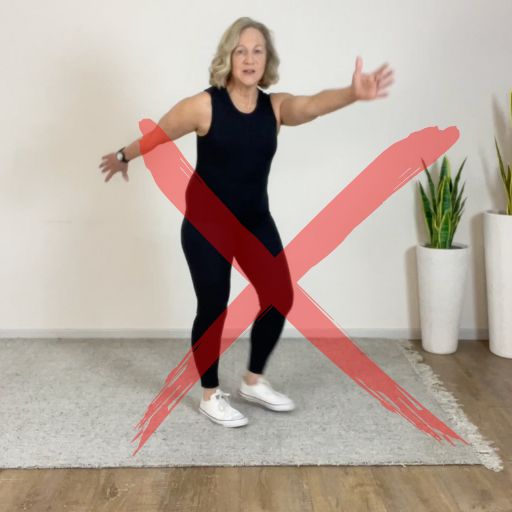
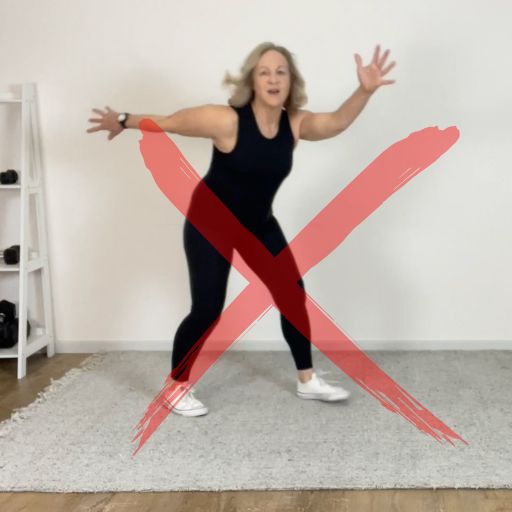
- As we walk along, our arms are going to swing just side to side, so not overly, don't need to have them way out here.
- Sometimes I see people walking along like this and I'm not sure what they're trying to do, but it looks very weird.
- So just a nice, relaxed swing of your arms, standing tall and the other thing is the pace of our stride.
- So we don't need to take big steps out, albeit we may do that for a short bit if we're trying to work something, but we want to have a nice comfortable stride as well and our head is on top of our body.
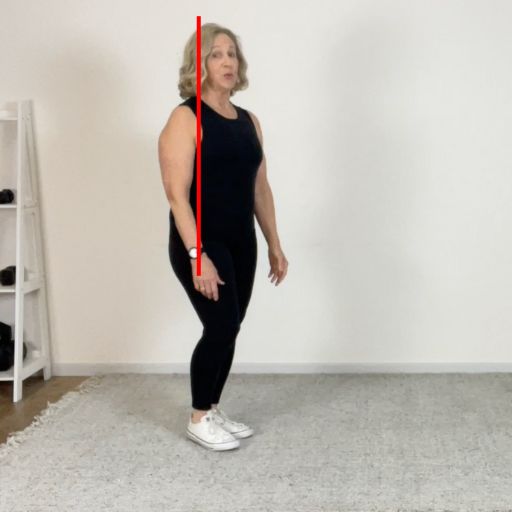
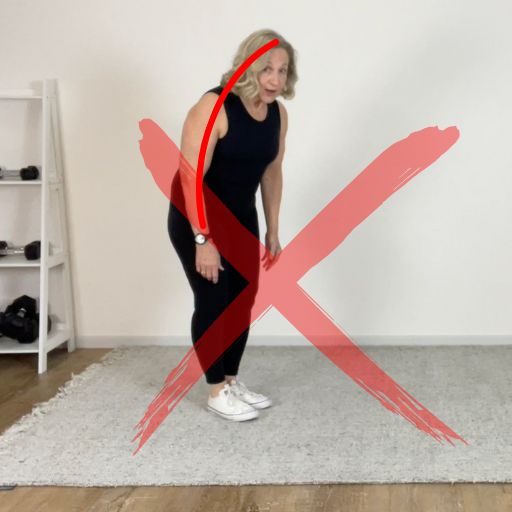
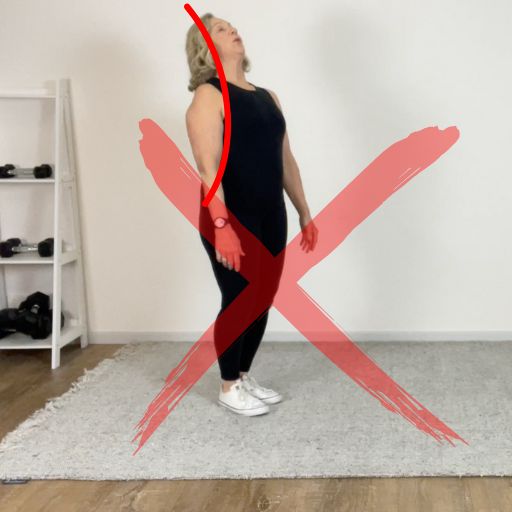
- But we want to have a nice comfortable stride as well and our head is on top of our body.
- So we don't want to head forward and that can be a problem if you are round shouldered.
- We don't want to head way back, but we just want our head to sit on top of our body.
- So we're at a nice, comfortable kind of pace and a comfortable stride.
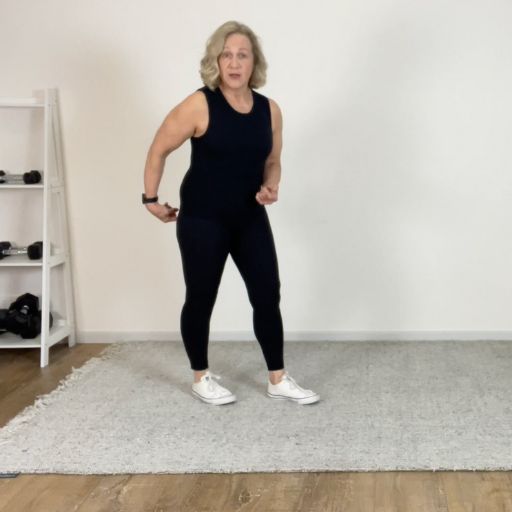
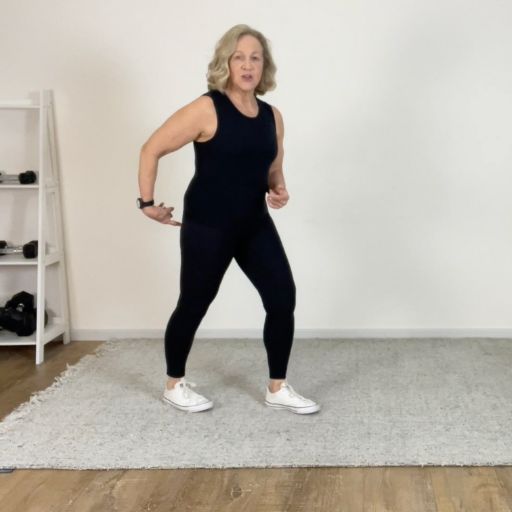
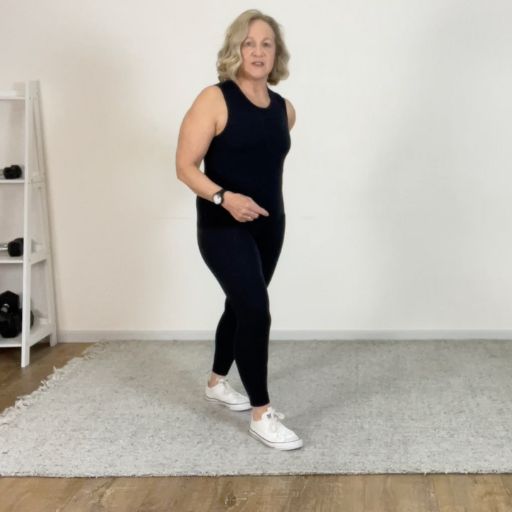
- One of the things that I would get you to do, and we'll look at this in the workout after this, is that if you don't have good glute activation, a walk when you're out on a walk can be a great time to get that.
- So with that back leg, as you take that back behind you, you're going to squeeze that butt cheek and squeeze the butt cheek. Now this is when you can do a little bit of a different step out.
- So squeeze that butt cheek, squeeze that butt cheek. So it'll be the butt cheek on the leg behind you. Do an added squeeze, added squeeze, added squeeze.
- So as you walk along, you can just take some specific walks where you are squeezing that butt cheek at the back, and it can really help to get you to activate that glute. So a good time to do it, but otherwise just a nice walking kind of look, standing tall as we come along, as we walk along.
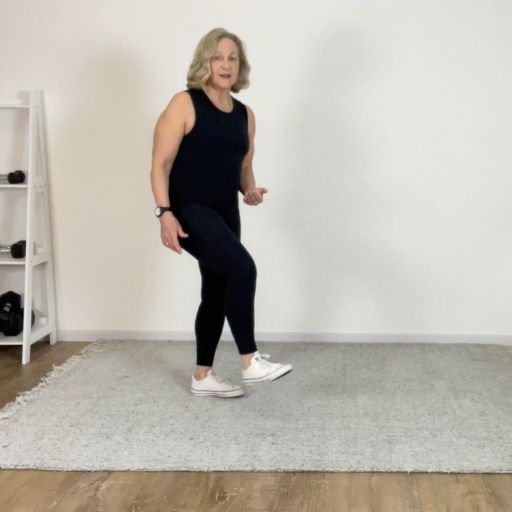
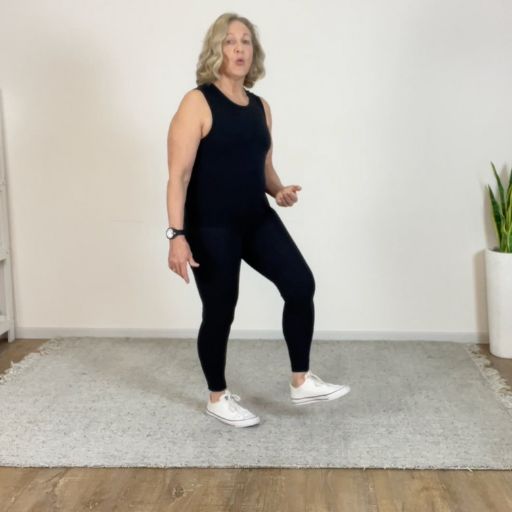
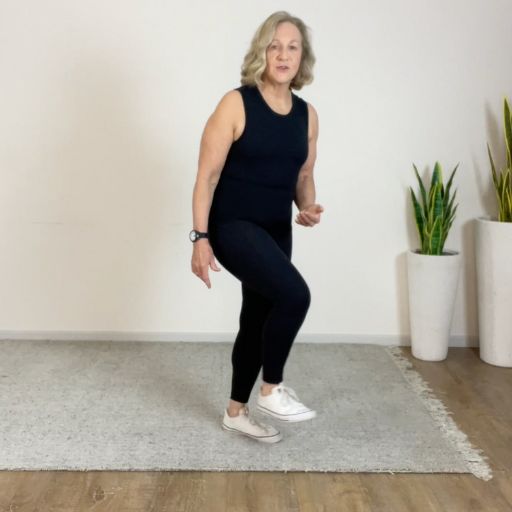
- So that heel is going to touch the ground first, not your toes first and not a flat foot. It could be an injury that's causing you to have a flat foot with one of your legs. So just be aware of that
- As we come along, then that other leg will be out to the back. So that will push out to the back. And if we've got tight hip flexors here, because maybe we've sat around quite a bit, then that could be that we can't take that leg out as far
- We may need to do smaller steps. Now that leg extends behind us, and then we come up onto those toes to push us forward. Now a reason you might not be able to do that is like me, a bunions, or you've just not got good supportive shoes or shoes that allow your feet to kind of expand out, which is really important as we get older. So it could be those shoes that are holding you back with that one.
- And then from there, we need to bring that knee, that back leg forward and need to bend that knee and be able to lift that foot up from the floor before we place that down, before we place that leg down and do our same walking forward. So this is exaggerating.
- But if you think that leg needs to come forward, it needs to be able to be brought up. And you may not be able to bring that knee up very high because of weak glutes. But you also may have something like Parkinson's maybe also preventing you from being able to pick that leg up and doing more of the shuffle.
Workout: 9-Minute Gait Repeatable Routine
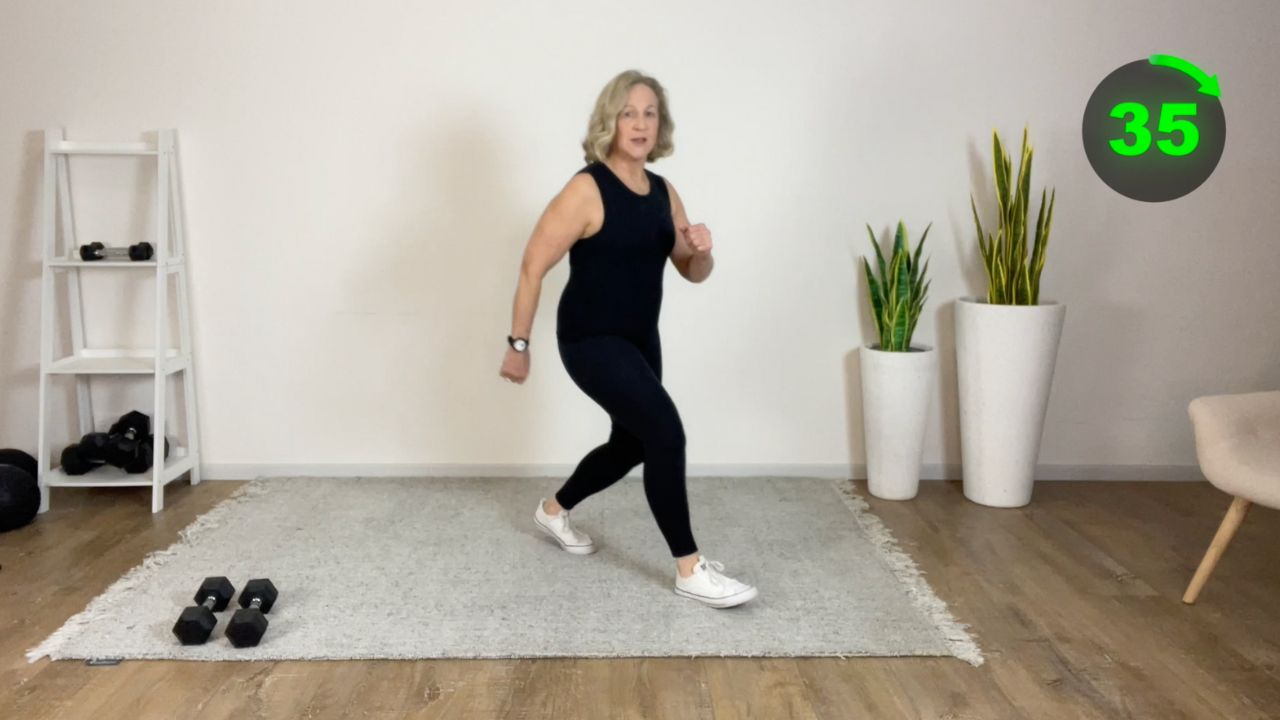
Click to play
Now, enjoy these gait exercises that Coach Sheree has put together into a 9 minute workout.
For a WARM-UP do some on the spot marching, with arms moving/swinging for 2-3 minutes before you start the workout. The warn-up intent is to simply get the blood flowing across your body and muscles.
This gait movement workout has been designed for those who know they have gait movement limitations when, walking stairs, and general walking on uneven/unstable ground, and know they need to gain the strength and mobility to the gain freedom, independence and safety they desire.
Workout timestamps:
Timer 40 seconds workout, and 10 seconds rest between.
Equipment Needed: Dumbbells and Bodyweight
5:28 - Walk with Glute Squeeze
6:18 - Lunge Walk
7:08 - Walking on Toes (balls of feet)
7:58 - Single Leg Chair Squats (Both sides)
9:38 - Side to Side Lunge
10:28 - Mountain Climbers (Chair assisted or Floor)
11:18 - Single leg extended Side Plank
12:58 - Glute Bridge with single leg raises
13:48 - Plank on Knees or Toes
Wrap Up & Final Advice:
Thank you so much for joining me today
That is the last of our ADL movements, our activities of daily life movements that help to get you through life and help you age well to keep doing all the things that you love. So thank you for joining me today and I look forward to seeing you next time.
Please leave a comment there if you found that any of this has been helpful or if you want to tell me anything about your gait. Thanks for joining me. See you next time.
Sources & Additional Reading:
- Electromyography Activity Across Gait and Incline: The Impact of Muscular Activity on Human Morphology
https://uwnmbl.engr.wisc.edu/pubs/ajphysanthro10_wallscheffler.pdf - Comparison of quadriceps setting strength and knee extension strength tests to evaluate lower limb muscle strength based on health-related physical fitness values in elderly people
https://bmjopensem.bmj.com/content/6/1/e000753 - Is Ankle Plantar Flexor Strength Associated With Balance and Walking Speed in Healthy People? A Systematic Review and Meta-Analysis
https://academic.oup.com/ptj/article/101/4/pzab018/6106269 - Natural turn measures predict recurrent falls in community dwelling older adults: a longitudinal cohort study
https://www.nature.com/articles/s41598-018-22492-6.pdf - Association ankle function and balance in community-dwelling older adults
https://journals.plos.org/plosone/article?id=10.1371%2Fjournal.pone.0247885