
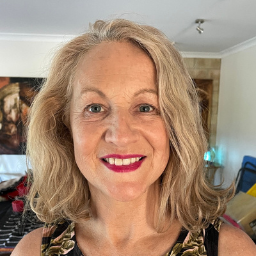
What does your mind say to you? Does it say I'm too old or I'll look silly if I start strength training or even I need to get fitter before I do it? Maybe you don't have time and that's what your mind says to you.
“I had a vision in my mind what sort of grandma I would be or nanny and this condition that I have was not in that picture and I raised five children. I was very active and hands-on and looking after little ones now is quite a challenge for me but I can do it. I can adapt myself to do it in my way and still do it.”
Timestamps and/or Read Video Transcript:
[Sheree]
What does your mind say to you? Does it say I'm too old or I'll look silly if I start strength training or even I need to get fitter before I do it? Maybe you don't have time and that's what your mind says to you.
No, one day I'll start. Well, this episode today is for you. Today you'll hear how shifting belief can shift your body.
In Grandma's Strong, the belief pillar is where transformation begins. We build a resilient, grace-filled mindset so you can start and keep going no matter your history or hurdles. And we all have hurdles.
In this episode, you'll hear how one of our women rewired her self-talk and found the courage to train consistently. So, let's have a listen to Marianne's story and see how she has overcome so many hurdles. Good morning, Marianne.
How are you?
[Maryanne]
I'm fine, thank you, Smee. Wonderful. [Sheree]
Well, we're talking today about mindset and what sort of mindset you need to have to keep going with strength training. And sometimes our mind can work for us or not for us, don't you agree?
[Maryanne]
Absolutely. Our mind can rule a lot of things in our life.
[Sheree]
Absolutely. So, Marianne, tell me how old you are and what prompted you to start strength training in the first place?
[Maryanne]
Okay, I'm 64 and I've always done some form of exercise but I have a condition called FND or functional neurological disorder and so it's affected my movement. So, I know that part of my health routine is to be as strong as I can so I can compensate for some of the things that I find hard.
[Sheree]
With your condition, that alters the way you walk so your gait, it alters how you process things and I know that when we train it also can alter you can't do things with your feet up in the air, it just won't allow you to do that. So, there's a few different things that we have to think about, don't we? Yes.
So, how long ago did you start strength training? Oh, you said you've been doing it for a while on and off. Yes.
And before you started strength training, did you have any fears about it because you've had this condition for how long? 14 years. 14 years.
So, before you started this last part of strength training, I know you had a trainer before me and now me, did you have any fears about strength training?
[Maryanne]
Yes. Like everyone, there's always a reason why we can't do something and for me, it was because I have verbal tics and I don't move the same way and I didn't want to make people uncomfortable. So, that played with me.
I thought, you know, I'm going to make people uncomfortable when I make vocal tics or physical tics and that didn't sit well with me but I had to get over myself and realise that it wasn't about everyone else, it was about me and I needed to do it for myself.
[Sheree]
So true. I think that's so true and even for people that don't have a condition such as Mary- Anne's, I think people are always afraid that particularly if you're training in a small group that others are going to look at you and kind of judge you whereas most people, well everyone that I've ever met in my whole time of being a trainer are so concerned about themselves, they couldn't care less about you. So, they don't actually look at you.
I guess if it's an unusual sort of movement or as you said tics that you have, they could think about it for a moment but they're more concerned about their own way. So, what they're doing themselves. Mary-Anne, how has your personal values helped to keep you consistent on the hard days?
What's a value? You seem to be somebody that's quite, what do you call it, resilient. Resilient is what I would say and I know you wouldn't agree with that because your thoughts don't always go that way but what's one of your personal values that's helped to keep you going on those hard days?
[Maryanne]
I think it is mainly continuing to be independent, having independence, being able to function in my world the best I can with doing what I want to do for myself, by myself. Not depending on anyone and I'm the only one who can do it. So, I know that if I don't do it, well then that's on me.
[Sheree]
Yeah, that's great and I think for quite a few people at home too have got this thought in their mind that I don't want to end up in an aged care facility. So, I need to be on track and I need to be consistent with doing things to strengthen my body. So, that's a good one and I know that you live quite close on the same land as your granddaughter.
They live on a separate property but on the same kind of area and you look after her quite a bit as well. So, I guess that is also something that keeps you going.
[Maryanne]
Yes, I mean I had a vision in my mind what sort of grandma I would be or nanny and this condition that I have was not in that picture and I raised five children. I was very active and hands-on and looking after little ones now is quite a challenge for me but I can do it. I can adapt myself to do it in my way and still do it.
[Sheree]
That is so good. Well, I recently had to look after my two grandkids for 10 days and in between their mum coming in and out of work and I was utterly exhausted. So, I can only understand with your condition as well that you've got to put that extra oomph in there to get through that day with your what four-year-old?
[Maryanne]
She's five.
[Sheree]
Five. Five-year-olds are active. [Maryanne]
She's spicy. [Sheree]
Oh, there you go. Even more so. She's probably running ahead of you and you're trying to catch up.
[Maryanne]
She is, yes.
[Sheree]
So, quite a bit of work going on there when you look after her. Losing muscle after 50 isn't your fault but it is fixable. Take the free How Strong Are You quiz and get a personalised result and a simple plan for your next step.
The link is in the description and pinned comment. So, Marianne, describe a recent challenge where you talked yourself into I can do it mindset when it was just a tough time. Yeah.
[Maryanne]
Recently, I've had a setback with my condition and my condition has made it harder for me to move fast and doubled my fatigue and all of those sort of things and while I could sit at home and go, well, I'll just rest it out, there's no time frame on a setback for any of us, you know. We've still and I want to still keep my muscles going even through it because I can't wait to get better. I need to continue to move and, you know, do what I can to keep what I've gained from training.
[Sheree]
So, for you, you don't really have a choice. You can't sit at home and wallow in self-pity because you know you're probably going to go more downhill.
[Maryanne]
Yeah, well, I mean, I certainly do have little pity parties but I also know that it's not beneficial to sit with it for long because it doesn't change anything and actually training gives me a dopamine hit. I'm retaining what I've gained and I'm not sitting around waiting for, you know, to be cured or to get better or whatever. I'm just working with it.
I may have to go down in weights but I'm still working. I'm still functioning and that in itself makes me feel better about whatever is happening.
[Sheree]
I think that is so good because of late you've started to walk with a stick, haven't you? And that obviously just helps because things are not going as well as what they had previously and you're hoping that you're not staying there for long. As you said, you don't know the timeline but for now that stick obviously helps you a bit with your gait and trying to get out and about.
We've kind of already answered this but I'll just ask you again. So, are there days where you just want to stay home and even stay in bed? I'm sure that there are, particularly when these sort of times happen where you go right down.
But if so, what's your go-to tool or ritual to re-centre your mind? It's obviously knowing that what you get from the strength training.
[Maryanne]
Absolutely. I've never walked out of a training session and thought, gee, I wish I hadn't come. Like everyone will go, gee, I don't feel like it today or this is hurting or I've got this and that.
But even on those days when I come, I walk out feeling, well, actually I have achieved something and feeling like you've achieved something and pushing through that negative mindset of I can't do it or because I can't do it all, I won't do any. No, I can still do something. I like that.
[Sheree]
That is so good and that is great. And that is probably, I think for all of us, I know there's a couple of times and I've said to my husband, I haven't trained for a couple of weeks, I need to do a training session, what should I do because I really don't feel like it? And he'll just tell me, just go and do 10 minutes worth.
And if that's all you do, you'll be fine. But what I've learnt, the secret I've learnt and this would be the same with you and everyone, Mary-Anne, is that after 10 minutes, your endorphins are flowing, you're feeling good and you actually want to keep going for that bit further or you want to complete the whole lot. So, I think for people at home, if you don't feel like training or you don't feel like starting, just tell yourself, I'm just going to do 10 minutes.
10 minutes and then I'll get into that and then I'm going to stop. But usually you don't stop, so that's a good thing. Mary-Anne, just to conclude this on mindset and I think, as I said before, I think you're a really resilient person because you keep going and you don't stay home and rarely do you call and say, I can't come.
It's normally if you have to mind your granddaughter. So, Mary-Anne, what would you say to someone at home who doubts that she can change, who doubts that they can even start because they have so many fears about strength training, they have fears that people are going to look at them if they're in a group, they have fears about they might hurt themselves. I talked to a client a few days ago and she felt that quite a few people don't come, they've thought about it, but they don't ultimately make the commitment because they're afraid they're going to hurt themselves.
What would you say to that lady at home and I want you to look at that lady at home right now and talk to her.
[Maryanne]
Well, I'd say that no matter what your situation is, we can always make a reason why we can't
do something. We're too big, we're too unfit to even start. So, where are we going to start?
Well, I always think of one foot in front of the other and that's very literal for me because that is how I've had to learn to walk. So, I would say that you can do it and the mindset is, your mind is what will stop you doing it. It's not your weight, it's not your physical side because you can always do something.
So, you have to be a bit disciplined and think of when you're retiring, everything you want to do, you've been waiting to do will involve movement. I don't want someone picking me up off the floor, I want to be able to get up off the floor myself. It's retaining dignity, it's retaining the ability to live the years you've been waiting for to live in a way that you saw all the things you wanted to do.
So, do it.
[Sheree]
I agree and there's some of you that may not want to go overseas and travel, but you may live on land, you may tend to animals, you may love to walk or hike. It's all of those things and more. Are you right?
Gardening, yeah, you're right. Look, you can pay someone to do that, but who wants to sit inside when you can be out doing the things that you love to do? And you're right, to be able to come up off the floor is a huge one as well.
So, it's all those things and more that are still out there for us to do, for all of us. Absolutely. So, thank you so much for joining me today because I'm hoping that there's someone at home that's been on the fence like, do I do strength training or not?
Oh, no, I don't think. I'm too old, I'm too this, I'm too that. You're never too whatever.
It can be started at a small pace and then proceed along. So, thank you so much for joining me. [Maryanne]
No problem.
[Sheree]
I hope you've inspired someone out there.
[Maryanne]
Thank you. Thank you.
STRONG A.D.L. Movements
Establish ACTIVE DAILY LIFE Movements that last and support the lifestyle that you desire!
